
Beowulf Energy is a private energy infrastructure company founded by Paul Prager, and its most useful valuation reference point comes from TeraWulf's May 2025 acquisition of its closely related entity, blank" rel="noopener noreferrer">Beowulf Electricity & Data LLC, for total consideration of approximately $52. Crunchbase’s person profile for blank" rel="noopener noreferrer">Paul Prager lists him as founder, chairman, and CEO of Beowulf Electricity & Data and as CEO of Beowulf Energy. 4 million. A separate SEC filing pegged the estimated fair value of the minority equity interest at $100.6 million as of the acquisition date. Those two figures bracket the most credible public range available for the Beowulf Energy corporate family as of mid-2026, though neither is a clean "net worth" number in the personal-finance sense of the word.
Beowulf Energy Net Worth: Estimate, Sources, and Updates


Which "Beowulf Energy" are we actually talking about?

This is worth clearing up because the name appears in a few different forms across public records, and conflating them will send you in the wrong direction fast. Here is the short map of the corporate family:
- Beowulf Energy LLC: the original private holding company, described in TeraWulf's SEC filings as a leading private energy infrastructure company and listed with a New York, NY address in New York State DPS records. Crunchbase and infrastructure directories classify it as an independent infrastructure holding company with offices in New York, Maryland, California, and Trinidad.
- Beowulf Electricity & Data LLC (beowulfed.com): the operating/renamed entity that builds and runs energy and digital infrastructure facilities across North America, with known sites at Lake Mariner (NY), Berwick (PA), and Big Horn (Montana). This is the entity that TeraWulf formally acquired in May 2025.
- Paul Prager: founder, chairman, and CEO of both entities. MarketScreener reports his personal net worth at approximately $529 million as of January 30, 2026. Many search results for "Beowulf Energy net worth" are actually surfacing Prager's personal wealth, not a company valuation.
- The Old English poem Beowulf: not relevant here, despite sharing a name.
The entity most people are researching when they search for Beowulf Energy net worth is either the corporate holding structure around Beowulf Energy LLC or its operating arm Beowulf Electricity & Data. Both are part of the same Paul Prager-led infrastructure ecosystem that has been progressively absorbed into TeraWulf's public company structure.
Net worth for a company is not the same as net worth for a person
When you look up a person's net worth, you are estimating total assets minus total liabilities: real estate, equity stakes, cash, investments, and so on. For a private company like Beowulf Energy, "net worth" is really a shorthand for one of three different things, and it matters which one you mean. If you are researching obese to beast net worth for Paul Prager or any related persona, remember that personal net worth is a different exercise than company valuation.
| Concept | What it measures | Relevance to Beowulf Energy |
|---|---|---|
| Book value / net assets | Total assets minus total liabilities on the balance sheet | Not publicly available for this private entity |
| Transaction valuation | Price paid in an acquisition or investment round | ~$52.4M total consideration in the May 2025 TeraWulf deal |
| Fair value (equity interest) | Estimated market value of an equity stake, per accounting standards | $100.6M minority equity interest fair value per TeraWulf's SEC filing |
| Founder personal net worth | Paul Prager's individual wealth across all assets | ~$529M as of Jan 2026 per MarketScreener |
For practical purposes, the transaction valuation and the SEC-reported fair value are your two anchors. The founder's personal wealth is a separate question, though it is clearly connected to the value he has built through these entities.
The current valuation range and how to read it

Based on the best available public data as of mid-2026, the Beowulf Energy corporate family sits in a valuation range of roughly $52 million to $100 million, with the following caveats attached to each end of that range.
The $52.4 million figure (specifically $3.0 million cash plus 5 million TeraWulf common shares) reflects what TeraWulf paid to acquire 100% of the membership interests of Beowulf Electricity & Data LLC and affiliates in May 2025. This is a real transaction price, which makes it the most grounded data point. However, acquisition prices are often negotiated for strategic reasons and can reflect minority discounts, earn-out structures, or related-party dynamics that compress the headline number below true economic value.
The $100.6 million figure comes from TeraWulf's own accounting of the estimated fair value of the minority equity interest as of the acquisition date, referenced in a later SEC filing (the wulf-20260331 10-Q). Fair value accounting under U.S. GAAP typically uses discounted cash flow or comparable transaction models, so this number reflects a more expansive view of what the equity was worth before the consolidation. It is not the same as what was paid, but it tells you what TeraWulf's auditors believed the stake was worth at that moment in time.
A reasonable working estimate, then, is that the Beowulf Energy/Electricity & Data operating business was worth somewhere in the $50 million to $100 million range at the time of its full absorption into TeraWulf. As of today, it no longer operates as a standalone entity in the same way, so a forward-looking "net worth" is really a question about what those assets contribute to TeraWulf's overall valuation.
Where these estimates come from and how credible they are
The two primary sources here are both grounded in SEC filings, which gives them a level of credibility you rarely get with private company valuations. Here is a breakdown of the methodology behind each number:
- TeraWulf press release (May 27, 2025): This announced the acquisition of 100% of Beowulf Electricity & Data LLC and disclosed the total consideration of approximately $52.4 million. Press releases tied to SEC filings are subject to securities law accuracy requirements, making this a high-credibility source.
- TeraWulf 10-Q (filed for the period ending March 31, 2026, filing reference wulf-20260331): This contains balance-sheet and acquisition accounting disclosures, including the $100.6 million estimated fair value of the minority equity interest. The fair value was determined using standard GAAP measurement methods, likely a combination of income approach (discounted cash flows) and market approach (comparable transactions).
- Crunchbase: Lists Beowulf Energy as a privately-held infrastructure holding company and Paul Prager as founder/CEO. Useful for corporate structure and executive identification, but financial figures on Crunchbase without paid access are often incomplete or outdated.
- MarketScreener/IBB insider profiles: Reports Paul Prager's personal net worth at $529 million as of January 30, 2026. These platforms aggregate insider trading data and public equity holdings, making the figure reasonably credible for an executive at a publicly traded company (TeraWulf), but it is an estimate, not a certified disclosure.
- NY DPS records and infrastructure directories: Confirm the legal existence and footprint of Beowulf Energy LLC. These are good for corporate verification but contain no financial data.
The weakest link in any Beowulf Energy valuation is that the core holding company (Beowulf Energy LLC) has never been a public company and has not disclosed standalone financial statements. Everything you can find is either inferred from TeraWulf's filings or comes from third-party databases working from limited data. Treat any figure outside of the SEC-sourced numbers as directional, not definitive.
What actually drives the value of this business
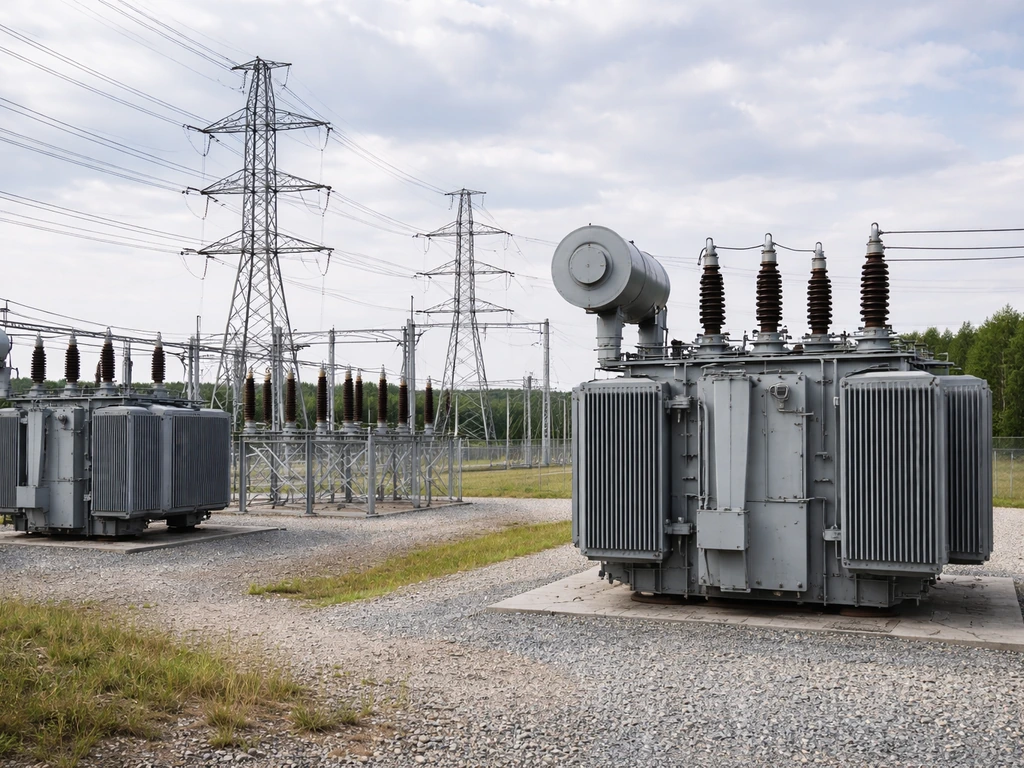
Beowulf Energy's financial value has been built on a specific and defensible niche: owning and operating energy infrastructure that powers high-demand digital workloads, particularly Bitcoin mining and HPC (high-performance computing) data centers. A 2020 Forbes article tied the Beowulf Energy name to a 105-megawatt Bitcoin mining data center joint venture with Marathon Patent Group, which was an early signal of how the company was positioning itself. That model has several distinct value drivers worth understanding.
- Power capacity and location: Facilities like Lake Mariner (NY), Berwick (PA), and Big Horn (Montana) were chosen for access to low-cost, often stranded or curtailed power. The value of these sites is directly tied to the cost-per-kilowatt-hour they can deliver at scale.
- Infrastructure ownership vs. operations: Beowulf Energy operated as an infrastructure holding company, meaning value comes from owning physical assets (transmission interconnects, substations, data halls) that are hard to replicate and expensive to permit.
- Relationships with TeraWulf: Because TeraWulf was itself a co-founded entity spun out of the Beowulf ecosystem, the line between the two companies was always blurry. That relationship structure meant Beowulf Energy's value was partially embedded in TeraWulf's market cap even before the formal acquisition.
- Leadership: Paul Prager's dual role across both entities meant that the value of the private company was inseparable from his operational and network capital. His estimated $529 million personal net worth is largely a reflection of equity in these interrelated businesses.
- Regulatory and grid access: Energy infrastructure companies derive significant value from FERC interconnection agreements, state utility permits, and grid access rights. These are not easily valued on a spreadsheet but represent meaningful competitive moats.
- Digital infrastructure demand: The explosive growth in AI and HPC workloads has increased the premium on large-scale, low-cost power infrastructure. Sites that Beowulf Energy developed in the 2018-2024 era became significantly more valuable as that demand accelerated.
Recent updates and risks that could shift the number
The single biggest recent update is the May 2025 acquisition itself. Once TeraWulf completed the purchase of 100% of Beowulf Electricity & Data LLC, Beowulf Energy as a standalone investable entity effectively ceased to exist in its prior form. The assets are now consolidated onto TeraWulf's balance sheet, which means the ongoing valuation story for these infrastructure assets lives inside TeraWulf (ticker: WULF) going forward.
That said, several risks and developments could still affect how you think about the value of this business inside TeraWulf:
- TeraWulf's stock price: Since the acquisition was partly structured as a share deal (5 million WULF shares), the effective value of what Beowulf E&D was "worth" in the transaction changes as WULF shares move. A significant drop in WULF stock retroactively reduces the acquisition's implied value.
- Bitcoin and crypto market cycles: Beowulf-originated facilities mine Bitcoin and support digital infrastructure. A prolonged crypto bear market compresses mining economics and reduces the value of those assets.
- AI/HPC demand growth: On the upside, continued strong demand for power-dense data center space for AI training workloads could dramatically increase the value of the same physical assets. Several industry reports in 2025-2026 have highlighted power availability as the primary bottleneck for AI infrastructure expansion.
- Regulatory environment: Federal and state-level energy regulations, grid interconnection queues, and environmental permitting can materially affect site timelines and asset values.
- Post-acquisition integration risks: Anytime a private entity gets absorbed into a public company, there are integration costs, potential goodwill impairments, and operational friction that can affect how the acquired assets perform on the acquirer's balance sheet.
How to verify and track this figure today

Because Beowulf Energy is now absorbed into TeraWulf, your best ongoing tracking tool is TeraWulf's public SEC filings. Here is a practical checklist for verifying and updating this information yourself:
- Go to the SEC EDGAR full-text search at efts.sec.gov and search for "Beowulf Electricity" or "Beowulf Energy" to find every filing where these entities are mentioned. Filter by TeraWulf (CIK lookup for WULF) for the most relevant results.
- Read TeraWulf's most recent 10-K (annual report) and 10-Q (quarterly report). Look for the acquisition footnotes and any "business combinations" or "fair value" disclosures related to Beowulf E&D. The wulf-20260331 10-Q is your current baseline.
- Check TeraWulf's investor relations page (terawulf.com/investors) for press releases about capacity expansions, new contracts, or financing events at former Beowulf sites.
- Search MarketScreener or TIKR for Paul Prager's insider holdings in WULF to track how his personal net worth estimate connects to the company's stock performance.
- Use Crunchbase's free tier to verify corporate structure changes or new funding rounds, keeping in mind that private entity data on Crunchbase can lag reality by months.
- For regulatory footprint verification, search the New York State DPS online document system and FERC's eLibrary for filings under "Beowulf Energy" to confirm any active or pending grid interconnection agreements.
- When you encounter conflicting numbers: always prioritize SEC-sourced figures over media estimates, and always distinguish between transaction price, fair value accounting, and personal net worth. They are measuring different things.
If you come across a headline that says "Beowulf Energy is worth X" without citing an SEC filing or a traceable transaction, treat it with skepticism. For a related discussion of Beast content ventures, including beasteater net worth, see the site's Beast franchise coverage and current estimate context. Private infrastructure companies are genuinely hard to value, and most third-party estimates are extrapolations from limited data. The $52 million to $100 million range tied to TeraWulf's actual acquisition accounting is the most honest bracket available right now. If you are specifically researching Paul Prager's personal wealth rather than the company itself, the $529 million estimate from MarketScreener is your best current data point, but remember it is an estimate derived from his equity positions, not a disclosed personal balance sheet.
It is also worth noting that the broader "Beast" franchise space on this site covers very different kinds of entities, from individual content creators to branded media businesses. If you meant the Beast industries net worth angle, it is a separate calculation from the Beowulf Energy corporate valuation discussed here. Beowulf Energy fits a different profile entirely: it is a capital-intensive private infrastructure company whose value is embedded in physical assets, power contracts, and now a publicly traded acquirer. If you came here for personal-style comparisons like the beast chase net worth, note that Beowulf Energy fits a different profile entirely as a capital-intensive private infrastructure company. For readers searching for a personal-style “beast mode net worth” number, it helps to remember this article is focused on the company’s valuation and embedded assets rather than a standalone personal net worth Beowulf Energy fits a different profile entirely. The methodology for estimating its worth is closer to industrial M&A analysis than to the creator economy math that applies to topics like Beast Philanthropy or Flying Beast. If you're trying to estimate Flying Beast net worth, the approach is different because you're looking at a personal or creator-style wealth picture rather than a private infrastructure valuation. If you are comparing financial profiles across energy infrastructure vs. entertainment franchises, that context matters.
FAQ
Why do search results show different “Beowulf Energy net worth” numbers even when they look like the same company?
Because the name is used across multiple related entities (the holding structure vs the operating arm), and after the May 2025 acquisition the operating assets are consolidated into TeraWulf. Any number you see later may be mixing a legacy stand alone valuation, a subset of assets, or a fair value estimate tied to a minority stake.
If Beowulf Energy is private, what is the closest thing to a true “net worth” number?
The closest public proxies are (1) the transaction price paid for the operating entity and affiliates, and (2) the SEC reported fair value of the minority equity interest at the acquisition date. Neither equals personal net worth, and neither is the same as a balance sheet net asset value.
Is the $52.4 million figure the same as what Beowulf Electricity & Data was “worth” economically?
Not necessarily. Transaction prices can embed deal terms such as discounts, earn outs, and related party dynamics. You should treat it as a negotiated consideration number, while the fair value figure is closer to what auditors modeled the stake was worth under accounting assumptions.
Does the $100.6 million SEC fair value represent the value of the whole company?
It reflects an estimated fair value of a minority equity interest as of the acquisition date, not an automatic valuation of 100% of everything held. To avoid overstating, you should map which interest was measured and whether it was minority or controlling for the accounting model.
How should I update the valuation after May 2025, since Beowulf is no longer standalone?
Use TeraWulf’s SEC filings as your primary update mechanism, because the assets are now reflected in TeraWulf’s consolidated statements. Look for changes in disclosures tied to infrastructure, power arrangements, and any segment or note level information that discusses the acquired assets.
What are common mistakes when comparing “company net worth” to Paul Prager’s personal wealth?
The mistake is applying personal net worth logic (assets minus liabilities for an individual) to a private infrastructure ecosystem. Personal wealth can be affected by how the founder holds equity, timing of liquidations, and leverage, which are not disclosed through company valuation metrics.
Can third-party databases produce reliable Beowulf Energy net worth estimates outside SEC filings?
They can be directionally useful, but they are often extrapolations from limited data because the core holding company did not publish standalone financials. If a number is not anchored to a transaction or SEC fair value disclosure, treat it as an estimate with a higher error margin.
If I see a “Beowulf Energy is worth X” headline, what quick checks should I do?
Confirm whether X is tied to (a) the May 2025 acquisition consideration or (b) the SEC reported fair value. Also check whether the article specifies whether it is valuing the operating entity, a minority stake, or the broader corporate family, since those can produce very different figures.
Does the valuation depend on Bitcoin mining and HPC demand conditions?
Yes, because the value drivers are capital intensive infrastructure plus operating economics tied to power availability and digital workload demand. Changes in mining economics, utilization, power costs, and contracting terms can move the forward looking contribution into TeraWulf, even if the historical acquisition bracket stays the same.
How can I distinguish valuation of embedded assets from valuation of future cash flows inside TeraWulf?
Embedded asset value is more about physical infrastructure and contractual rights, while future cash flow value depends on modeling assumptions such as discount rates, expected utilization, and margins. SEC fair value measures typically reflect modeling, so use them as inputs for understanding how auditors viewed cash flow potential at the acquisition date, not as a forward guarantee.
The Beast Chase Net Worth: Estimated Earnings Explained
Estimate the beast chase net worth with sources and income breakdown, plus how to verify and resolve differing figures.