
The 'Door Jammer' tied to Dragons' Den is DoorJammer, a portable personal security device pitched on the UK show's Series 14, Episode 9, which aired on New Year's Day 2017. The founders who walked into the Den were Phil Stratford and Roger Willems, asking for £80,000 in exchange for a 15% equity stake.
Door Jammer Dragons’ Den Net Worth: Estimate, Method, Verify

Marcus Thorne
8 Jun 2026

In the episode summary table for Series 14, Episode 9, Wikipedia lists “DoorJammer” as the product pitched, with Phil Stratford and Roger Willems, airing on 1 January 2017 the product pitched as DoorJammer. They left without a deal, but the business survived and eventually scaled to hundreds of thousands of units sold under a licensing arrangement with Penn Elcom, a major international manufacturer.
There is no publicly confirmed personal net worth figure for Stratford or Willems, but working through publicly available data gives a reasonable ballpark, and this article walks through exactly how to get there.
Which 'Door Jammer' and which Den are we talking about?
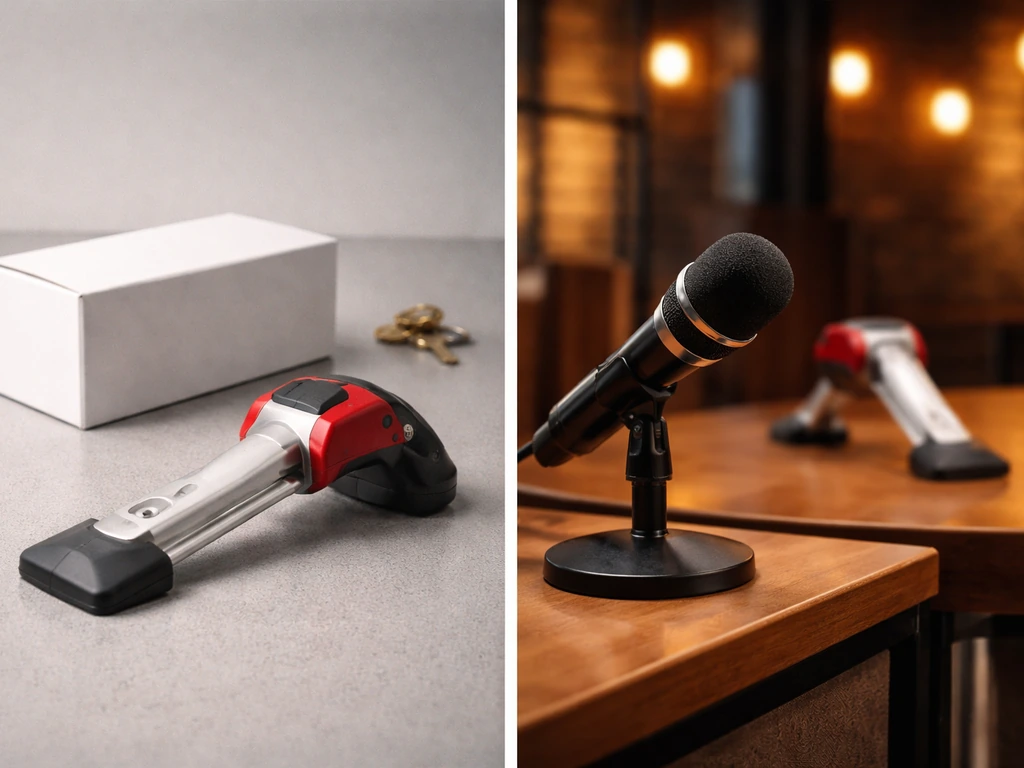
Before getting into numbers, it is worth clearing up a real disambiguation problem. Search for 'door jammer' and you will find multiple products, including a US design patent filed in 1991 by a completely different inventor (Kenneth S. Malonson) that has nothing to do with Dragons' Den. The 'Door Jammer' connected to Dragons' Den refers specifically to the DoorJammer brand, which is a wedge-style portable door security device.
It appeared on the British version of Dragons' Den, not the Canadian franchise or any other international spin-off. The episode is Series 14, Episode 9, broadcast on BBC One on 1 January 2017. Anchoring on those details matters a lot if you are trying to trace financial disclosures, because every company registry search, trademark lookup, or media interview needs to be tied to the right entity and the right people.
There is a secondary wrinkle in the brand story. The DoorJammer product was originally invented by a designer referred to as 'Von Saint,' whose full name is given in the Sunderland Echo as Esteban Saint James of Von Saint Designs. Phil Stratford and Roger Willems are the entrepreneurs who brought the product to Dragons' Den, but they licensed the invention rather than invented it themselves. Post-episode, the brand passed into the hands of Penn Elcom Limited (trading as DoorJammer), which holds exclusive worldwide rights under a licensing agreement directly from Von Saint Designs. Understanding that three-way structure, inventor, licensee-entrepreneurs, and eventual corporate rights holder, is essential for interpreting any net worth claim correctly.
Who is actually behind the DoorJammer brand?
The key people and entities involved at different stages are distinct, and collapsing them into one 'net worth' figure would be misleading. Here is how the structure breaks down:
- Esteban Saint James (Von Saint Designs): The original inventor and designer of the DoorJammer product. Von Saint Designs retains the underlying IP under a licensing agreement.
- Phil Stratford and Roger Willems: The entrepreneurs based in Sunderland who brought DoorJammer to BBC's Dragons' Den in Series 14. They sought £80,000 for 15% equity to fund manufacturing and sales.
- Penn Elcom Limited: A UK-based international manufacturer and technology group that became the corporate home of DoorJammer, holding exclusive worldwide commercial rights under the licensing deal from Von Saint Designs. DoorJammer operates as a trading name of Penn Elcom Limited.
- DoorJammer Corporation: Referenced on the brand's North American sites as the entity behind DoorJammer, described as 'part of the Penn Elcom Group,' and the vehicle for US/Canadian market operations.
Penn Elcom is not a small outfit. It is a well-established manufacturer best known for professional audio, flight case, and rack hardware products sold globally. Having DoorJammer fold into that group means the product sits inside a much larger corporate structure, which makes isolating DoorJammer's standalone valuation tricky but also signals a level of operational and distribution credibility that a purely independent startup would not have.
What the net worth actually looks like (and what it doesn't)

There is no confirmed public net worth figure for Phil Stratford, Roger Willems, or Esteban Saint James. DoorJammer is a private brand operating under a private company (Penn Elcom Limited), so none of the numbers are audited, publicly disclosed in full, or broken out as a standalone segment in any filing. What we can do is build a reasonable range from the data points that are publicly available, using the same methodology that analysts apply to private companies generally: unit economics, comparable multiples, and structural context.
Unit sales as the clearest public signal
The brand's own published material gives two different unit sales figures at different points in time. The Canadian site references 'more than a third of a million products' sold, while Penn Elcom's Spanish-language marketing states more than 750,000 units have been sold since the 2016 launch. The 750,000 figure is the more recent claim.
If a DoorJammer unit retails at roughly £25 to £35 (the standard retail price range in the UK), and assuming a wholesale or manufacturer margin of 30 to 40%, 750,000 units implies cumulative gross revenue in the range of £18 million to £26 million since launch. That is cumulative revenue, not annual, and it is revenue to the Penn Elcom group entity, not profit. Net founder earnings from a licensing deal would be a fraction of that.
Applying private company valuation logic

For a private product-based business, the most practical valuation approach is a market comparable multiple. Consumer product companies with decent brand recognition and police accreditation (DoorJammer holds UK Secured by Design 'Police Preferred Specification' accreditation) typically trade at 1x to 3x annual revenue when sold or valued for licensing purposes.
If DoorJammer generates, say, £2 million to £4 million in annual revenue at its current scale (a reasonable inference from the unit volumes and pricing, though unconfirmed), the brand's standalone value as a business unit inside Penn Elcom would sit somewhere in the £2 million to £12 million range on a gross basis. That is a wide range precisely because the inputs are estimated, not disclosed.
The personal net worth of founders like Stratford and Willems would depend entirely on what equity or royalty structure they retained post-pitch and post-Penn Elcom deal, which has not been publicly disclosed.
Confidence level on these estimates
Low to moderate. The unit sales figures come from the brand itself (self-reported, not independently audited), the retail pricing is observable, and the valuation multiples are reasonable industry benchmarks. But the actual licensing terms, royalty rates, founder equity stakes, and Penn Elcom's internal accounting for DoorJammer are all private. Until a Companies House filing breaks out DoorJammer-specific financials, or an interview reveals founder earnings, any net worth figure attached to Stratford or Willems specifically is an inference, not a fact.
| Entity | Estimated Range | Basis | Confidence |
|---|---|---|---|
| DoorJammer brand (standalone) | £2M – £12M | Unit volumes × retail pricing × comparable multiples | Low-moderate |
| Phil Stratford / Roger Willems (personal net worth from DoorJammer) | Not publicly disclosed; likely £500K – £3M if retained royalty/equity | Inferred from licensing structure and sales scale | Low |
| Esteban Saint James / Von Saint Designs | Licensing royalties only; no public figure | IP licensor role; no disclosed terms | Very low |
| Penn Elcom Limited (full group) | Private company; no segment disclosure | Broader than DoorJammer alone | Not applicable |
What changed after the Dragons' Den pitch
The Dragons did not invest. The IP blog notes the panel had doubts about whether the product was 'really solving a specific problem,' and there was concern that Stratford and Willems had previously failed to get DoorJammer into a major retailer they already had a relationship with. Walking out of the Den without a cheque is not unusual, and in DoorJammer's case it clearly was not the end of the story.
The New Year's Day 2017 broadcast gave DoorJammer something arguably more valuable than Dragon investment: national TV exposure on BBC One. Consumer security products often see an immediate spike in direct-to-consumer web traffic after a Dragons' Den airing, and DoorJammer subsequently expanded into a full product line including a 'DoorJammer Lockdown' variant aimed at institutional and emergency use cases.
The brand also pursued and secured UK police accreditation through Secured by Design, which opened doors (so to speak) to B2B and institutional sales channels that retail alone could not reach. The Penn Elcom group relationship, which brought manufacturing muscle, global distribution networks, and the corporate infrastructure to manage worldwide licensing, appears to have been the defining post-Den development. Without that partnership, 750,000 units sold globally would have been very difficult for a small Sunderland-based startup to achieve independently.
The timeline in short: pitch filmed and broadcast on 1 January 2017, no deal secured, brand exposure leads to direct sales growth, Penn Elcom group takes on exclusive worldwide rights via licensing from Von Saint Designs, product line expands to DoorJammer Lockdown, police accreditation achieved, international sales reach at least 750,000 units. That trajectory represents a meaningful step up from the pre-Den position, even without Dragons' capital.
How to verify and update these numbers yourself

The most reliable path to better numbers is public company filings. Since DoorJammer trades under Penn Elcom Limited in the UK, the starting point is Companies House (companieshouse.gov.uk). Searching Penn Elcom Limited will surface annual accounts, confirmation statements, and director information. The accounts will not break out DoorJammer as a separate segment, but total revenue trends, profit figures, and any subsidiary structures can help frame the parent entity's scale. If DoorJammer Corporation is registered as a separate entity in the US or Canada, a parallel search through the relevant state secretary of state database or Canada's federal corporate registry (Corporations Canada) would be worth running.
- Companies House (UK): Search 'Penn Elcom Limited' for annual accounts and director details. Check for any subsidiary named DoorJammer.
- Intellectual Property Office (UK) / EPO: Search for DoorJammer trademarks and any patent filings under Von Saint Designs or Penn Elcom to understand IP ownership structure.
- Credible media interviews: The Sunderland Echo has covered Stratford and Willems; search their archive for any post-2017 follow-up on revenues or business outcomes.
- DoorJammer's own published blog and 'About Us' pages: The brand periodically updates unit sales milestones, which serve as the best publicly available proxy for revenue scale.
- Dragons' Den episode follow-up content: The BBC and third-party shows sometimes revisit past pitches; any 'where are they now' segment would be a primary source for updated financial context.
- Startups.co.uk and the Dragons' Den IP blog: Both have tracked DoorJammer and may publish updates if significant business events occur.
- Bloomberg / Forbes methodology as your framework: When constructing your own estimate, apply the approach Forbes uses for private companies: estimate annual revenue from observable data, apply a comparable public-company price-to-revenue multiple, then adjust downward for illiquidity and private-company risk.
One important methodological note: when you see a 'net worth' figure for a private company founder online, treat it as an estimate unless it is accompanied by a disclosed transaction, a Companies House filing, or a credible interview where the subject confirms the figure. For DoorJammer specifically, any number you find reported without those anchors is someone else's inference, including the ranges in this article. The most honest approach is to present a range, flag the assumptions, and revisit when new data surfaces, exactly the approach Bloomberg and Forbes use for their own private-company valuations.
How DoorJammer compares to similar Den pitches
DoorJammer fits a pattern seen across many Dragons' Den product pitches: a physical consumer product with a clear use case, moderate manufacturing costs, and the potential for volume-driven margins. Products that leave the Den without investment but still scale tend to do so through one of two routes: a major retail partnership or a licensing/manufacturing deal with an established group.
DoorJammer took the latter path, which is actually less common and arguably more durable, since it shifts the capital and distribution risk to Penn Elcom while allowing the brand and IP to generate royalty income. Compare that to pitches like Zapper or Brizi, which are technology and software-adjacent plays where valuation dynamics are driven more by user growth and recurring revenue than by unit manufacturing economics.
Brizi’s Dragons' Den deal and subsequent trajectory are often discussed in articles that estimate Brizi Dragons' Den net worth from public signals. For comparison, Zapper Dragons' Den net worth figures are typically calculated the same way: using public signals and then applying valuation logic to estimate founder gains.
Consumer hardware like DoorJammer is valued differently, more like a product brand than a SaaS business, and that context matters when setting expectations for what 'net worth' means in this space.
The broader Dragons' Den landscape, including the Canadian franchise and the various judges and entrepreneurs who have passed through it, shows that the biggest wealth creation typically happens post-Den rather than because of Den investment. If you are looking up the dragons den judges net worth, it helps to distinguish judge wealth from what entrepreneurs actually walk away with after a pitch biggest wealth creation typically happens post-Den. DoorJammer is consistent with that pattern. The exposure matters more than the cheque, and the business fundamentals after the cameras stop rolling determine whether the founders end up with meaningful personal wealth or just a good TV story.
FAQ
If the Dragons did not invest, how could Phil Stratford and Roger Willems still earn meaningful money from DoorJammer?
Even without a Dragons investment, founders can profit through licensing, retained IP royalties, or selling their initial distribution rights. In DoorJammer’s case, the public record points to a licensing path, so the key to any founder net worth estimate is whether Stratford and Willems negotiated upfront payments, ongoing royalties, or equity in the later licensee structure after Penn Elcom took over worldwide rights.
How can I tell whether an online “net worth” number for Stratford or Willems is trustworthy?
Treat any figure published without a linked document trail as a low-confidence estimate. Higher confidence comes only if the number is supported by a disclosed transaction (for example, sale of shares), a Companies House filing that specifies ownership or remuneration clearly, or a direct, quotable statement from the founders that ties the figure to a specific period.
Does Penn Elcom’s financial performance equal DoorJammer’s profit?
Not automatically. DoorJammer revenue sits inside a broader manufacturing business, so DoorJammer-specific profit could be lower or higher than the parent average depending on production costs, warranty claims, marketing spend, and internal transfer pricing. A better approach is to focus on the licensing royalty or internal margin structure rather than assuming the unit sales imply comparable profit for the parent overall.
What should I use to estimate annual revenue, should I rely on “since launch” unit claims or a single-year snapshot?
For valuation, annual revenue is usually more useful than cumulative units. If you only have “since launch” unit totals, you need a time-spread assumption (monthly or yearly sell-through). A common mistake is treating cumulative units as if they were sold in one year, which inflates revenue and any net worth range derived from it.
How do licensing terms affect a founder’s personal net worth estimate more than unit sales?
Unit sales mostly affect topline revenue, while net worth depends on what portion flowed to the founders. Royalty rates, whether royalties were capped or stepped down over time, whether there were minimum guarantees, and whether founders had equity in the licensee all materially change outcomes. Two companies selling the same number of units can produce very different founder wealth if the contract terms differ.
Could the “Door Jammer” I find online be a different product and still lead me to the wrong numbers?
Yes. “Door jammer” can refer to unrelated designs and even different jurisdictions or inventors. That is why entity matching matters, you should confirm the brand name DoorJammer (DoorJammer Lockdown as applicable), the relevant UK TV appearance, and the correct company trail tied to Penn Elcom Limited rather than relying on generic product descriptions.
Why might DoorJammer’s police accreditation matter for valuation or sales timing?
Accreditations like Secured by Design can improve B2B credibility and procurement acceptance, which often shifts sales from purely retail to institutional channels. That can change the ramp curve, typically increasing sell-through stability and expanding higher-volume contracts, which affects annual revenue estimates and therefore valuation ranges.
What Companies House checks are most useful if I want to tighten the net worth range?
Start with Penn Elcom Limited’s annual accounts trend (revenue, operating profit, and cash position) and director information, then look for any changes in subsidiary structures, notes on intangible assets, and accounting policies that might indicate brand or licensing treatment. You likely still will not get DoorJammer as a separate segment, but parent-level disclosures can narrow the plausible margin and royalty outcomes.
If I find DoorJammer-related patents or trademarks, can I use that to infer founder wealth?
Patents and trademarks can confirm IP ownership and licensing pathways, but they do not by themselves reveal royalty rates, equity splits, or payments. IP records are best used to validate which party controlled the technology, then you still need contract-like signals such as disclosed licensing arrangements, shareholdings, or credible interviews for wealth estimation.
How should I interpret a valuation “multiple” approach for a hardware brand like DoorJammer?
Multiples can mislead if you apply software or SaaS-style logic to a physical product. For hardware and licensing hybrids, the multiple should reflect durability of demand, margin quality, and replacement cycles for the device. Also, using the wrong revenue basis (gross retail vs wholesale/manufacturer revenue) can distort the multiple’s meaning, so align units and price assumptions with the level where the company actually records revenue.
Next Article
Dragons Den Judges Net Worth: Estimates by Judge
Up-to-date estimates of Dragons’ Den judges net worth, how calculated, per-judge figures, and how to verify quickly.