
BBQ Dragon is a small consumer grilling-products brand founded by brothers Bruce and George Prior and operated through their company Archipelago Group LLC, based in Lakewood, Colorado. It is not a YouTube channel, a social media personality, or an entertainment franchise. The net worth question here is really about the business value of that brand, and based on publicly available revenue signals, crowdfunding history, and comparable small-brand valuations, a defensible estimate puts the BBQ Dragon brand at roughly $1 million to $3 million in total business value as of mid-2026, with meaningful uncertainty on both ends of that range.
BBQ Dragon Net Worth: Estimated Value, Sources, and Breakdown

Marcus Thorne
11 Jun 2026
What exactly is BBQ Dragon?
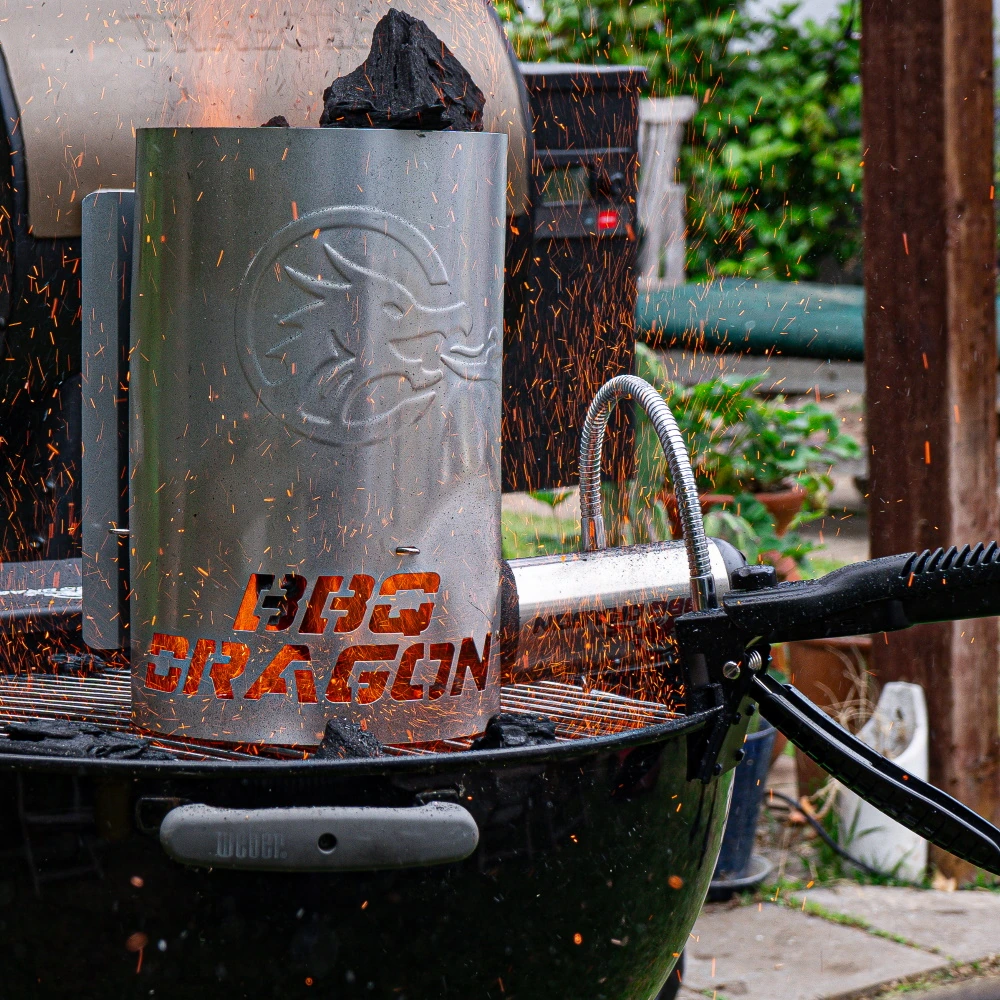
Before any number makes sense, it helps to be precise about the entity. BBQ Dragon is a product brand, not a person, not a content creator, and not an entertainment franchise. Bruce Prior and George Prior launched it in 2013 with the BBQ Dragon Fan, a battery-powered bellows tool designed to speed up charcoal lighting. Their legal operating entity is Archipelago Group LLC, and the brand does business under the BBQ Dragon name.
The company sells through its own site at bbqdragon. com as well as retail channels including Walmart. Its flagship products include the BBQ Dragon Fan (original retail price around $49. 99) and the Chimney of Insanity XL charcoal chimney (also priced at $49.
99). George Prior serves as Director of Marketing; [Bruce Prior is the key principal listed on Dun and Bradstreet](https://www. dnb. com/business-directory/company-profiles.
archipelagogroupllc. 4d987af605bac38a83467b327eef4d68. html). They are brothers running a tightly held, privately owned small business.
This disambiguation matters because searches for 'BBQ Dragon net worth' can pull up confusion with unrelated handles or personas. If you are specifically searching for cal the dragon net worth, this article explains why the most documented financial trail belongs to the Prior brothers' BBQ Dragon brand. There is no prominent YouTuber, Twitch streamer, or entertainment character widely known as 'BBQ Dragon' at the level that would generate independent net worth reporting. The entity with a documented financial trail is the Prior brothers' grilling-accessories brand. Unlike some of the other 'dragon' names tracked on this site, such as content creators or TV franchise properties, BBQ Dragon is squarely a physical-product small business.
The net worth estimate and how to read it
Estimating the net worth of a privately held small business requires working backward from whatever revenue data is public, then applying a reasonable valuation multiple for the category. Here is what the public record shows: BusinessDen reported in 2016 that BBQ Dragon had sales of approximately $200,000 in the prior year (2015).
That was the brand's early phase, right after a Kickstarter campaign that raised over $100,000 in under 30 days in 2015, and after an appearance on the Science Channel reality show 'All-American Makers. ' By 2021, the company was running PR Newswire press releases for sweepstakes campaigns and had active TV and streaming advertising tracked by iSpot as recently as June 2026. That advertising activity implies ongoing revenue investment and a brand that is still actively marketing.
Consumer product brands at this stage, selling $40-$50 price-point tools through e-commerce and retail with active ad spend, typically generate somewhere between $500,000 and $3 million in annual revenue depending on channel mix and repeat purchase rates. Applying a conservative 1x to 2x revenue multiple (common for small, owner-operated product brands with limited intellectual property moat), the business value lands in the $500,000 to $6 million range. Narrowing that with the available evidence, a central estimate of $1 million to $3 million in total brand and business equity is the most defensible figure. The personal net worth of Bruce and George Prior individually would depend on what equity they retain, any salaries drawn, and personal assets outside the business, none of which are publicly documented.
Where the money comes from

BBQ Dragon's revenue model is straightforward for a small product brand. The main streams are direct-to-consumer product sales through bbqdragon.com, third-party retail and marketplace sales (including Walmart), and whatever advertising and promotion budget they allocate. There is no documented evidence of a large licensing deal, a franchise model, or significant event-based income. The business is product-first.
- Direct e-commerce sales: Products priced in the $30 to $75 range sold through bbqdragon.com, where margins are typically highest for a brand selling direct.
- Retail and marketplace distribution: Walmart seller listings indicate third-party retail presence, which adds volume but at lower margins due to retailer cuts.
- TV and streaming advertising: iSpot tracking confirms active ad buys as of June 2026, which is both a cost and a signal that the brand is generating enough revenue to justify continued spending.
- Crowdfunding and launch capital: The 2015 Kickstarter raised over $100,000 and the Indiegogo 'Chimney of Insanity' campaign added additional early-stage funding, giving the brand working capital to scale.
- Content and PR: The BBQ Diet PDF, 'BBQ Stories' promotion, and sweepstakes campaigns are marketing-driven but also build brand equity and repeat customer relationships.
- Media exposure: The 'All-American Makers' Science Channel appearance in 2015 functioned as earned media, driving awareness without direct ad spend.
How the brand grew over time
2013: Launch and early traction

Bruce and George Prior released the original BBQ Dragon Fan in 2013, pricing it at $49.99. EDN covered the brand's early Christmas giveaway campaign that year, suggesting the Priors were already using PR and promotions to build an audience. At this stage the business was pre-revenue at scale, essentially a bootstrapped hardware product looking for market fit.
2015: Kickstarter, TV, and legitimacy
The 2015 Kickstarter campaign was a turning point. Raising more than $100,000 from backers in under 30 days validated demand and provided production capital. Almost simultaneously, the brand appeared on Science Channel's 'All-American Makers,' which gave it national TV exposure and positioned it as a credible, innovative product rather than a niche gadget. This is the kind of compounding momentum that accelerates small brand growth.
2016: $200,000 in annual sales, second product
By 2016, the Priors reported $200,000 in annual sales and launched the Indiegogo campaign for 'The Chimney of Insanity,' expanding the product line beyond the original fan. This phase marks the transition from single-product startup to a small multi-product brand. $200,000 in revenue for a two-person brother operation is modest but real, and it set the baseline for subsequent growth.
2021 to present: Sustained marketing, active advertising
The 2021 PR Newswire campaigns show a brand investing in customer storytelling and sweepstakes promotions, which are tactics used to build email lists, repeat purchases, and social proof. The continued iSpot ad tracking as of June 2026 confirms the brand is still spending on paid media, which almost always means revenue is covering that spend. iSpot’s “BBQ Dragon” ad-tracking page shows that Data available through 06/02/2026 for its most recent monitoring window iSpot’s “BBQ Dragon” ad-tracking page shows data available through 06/02/2026. A brand running TV and streaming ads over a decade after founding is not a startup anymore, it is a going concern with an established customer base.
Costs and liabilities that shrink the number

Net worth is not the same as revenue, and for a physical-product brand, the gap between gross sales and actual equity value can be wide. Here are the cost categories that pull the valuation down from the top-line revenue figure.
- Cost of goods: Physical products like charcoal chimneys and fan units involve manufacturing, materials, and logistics costs. Gross margins for consumer hardware typically run 40% to 60% at best.
- Advertising spend: Running TV and streaming ads through iSpot-tracked placements is not cheap. Even modest campaigns can cost $50,000 to $200,000 annually, eating directly into profit.
- Platform and retail fees: Selling through Walmart's marketplace and Amazon (if applicable) involves fees that reduce net revenue per unit sold.
- Fulfillment and warehousing: Shipping physical products adds per-order costs, and holding inventory ties up working capital.
- PR and marketing overhead: Press releases via PR Newswire, sweepstakes administration, and content like the BBQ Diet PDF all carry production and distribution costs.
- IP and legal: Maintaining product trademarks, any patent protection on the fan mechanism, and general business legal compliance are ongoing expenses for a brand operating in a competitive grilling accessories market.
- Taxes: As an LLC, Archipelago Group's profits flow through to the founders' personal taxes, meaning federal and state income taxes reduce the actual personal wealth accumulation from the business.
How to verify or update this estimate yourself
Because BBQ Dragon is a privately held LLC, there is no public financial filing like a 10-K. That means any net worth estimate, including this one, is built from indirect signals. Here is how to stress-test or update the number on your own.
- Check Dun and Bradstreet: The Archipelago Group LLC profile on D&B sometimes includes revenue range estimates based on employee count and industry benchmarks. These are estimates, not audited figures, but they are a useful starting point.
- Look at Buzzfile and similar business databases: Buzzfile lists BBQ Dragon under Archipelago Group and may show employee count or revenue band updates over time.
- Monitor iSpot ad tracking: Active ad tracking on iSpot tells you whether the brand is still spending on media. If ad activity drops off, that is a signal of reduced revenue or a shift in strategy.
- Watch crowdfunding platforms: The Prior brothers have used Kickstarter and Indiegogo to launch products. New campaigns would signal product pipeline activity and give campaign-level funding data.
- Check Walmart and Amazon seller rankings: Third-party tools like Jungle Scout or Helium 10 can estimate sales volume for products listed on Amazon. If BBQ Dragon products appear, those estimates give a rough revenue floor.
- Search PR Newswire and BusinessWire: Press releases from BBQ Dragon or Archipelago Group are a proxy for business activity. A brand actively issuing releases is typically generating revenue and planning campaigns.
- Look for acquisition news: If the brand were acquired by a larger grilling or outdoor-lifestyle company, that deal would likely generate press coverage and give a concrete valuation anchor.
When evaluating any number you find, ask whether it is based on actual revenue data or just estimated from social following and ad spend. For BBQ Dragon, the 2016 revenue figure of $200,000 is the only hard public data point. Everything else is extrapolation, including the estimate in this article. A higher valuation (toward $3 million or above) would require evidence of significantly higher annual revenue, a licensing deal, or an acquisition offer. A lower valuation (under $500,000) would be supported by evidence of declining ad spend, product discontinuation, or the business winding down.
BBQ Dragon vs. similar names and what not to confuse
One reason this search gets complicated is the word 'dragon' shows up across a lot of unrelated net worth topics. People sometimes also mean the much-discussed Dragon Skinwalker Ranch net worth, which is a different topic altogether. The BBQ Dragon brand has nothing to do with entertainment franchises, TV shows, or content creators who use dragon-themed names.
If you meant the spa dragon net worth instead, the key is to confirm which specific “spa dragon” account, brand, or operator you are looking at before comparing any numbers. If you arrived here looking for the net worth of a gaming streamer, a Shark Tank-style investor, or a TV character associated with the word 'dragon,' you are likely looking for something else entirely.
The net worth of the BBQ Dragon brand (Archipelago Group LLC) also should not be confused with the personal net worth of Bruce Prior or George Prior as individuals. The brothers likely draw salaries or distributions from the business, but their personal assets, investments, and liabilities outside the company are not documented publicly. The brand valuation and their individual net worth are related but not the same number.
It is also worth noting that BBQ Dragon is a product company, not a franchise. There are no franchise fees, no licensed operators, and no franchise disclosure documents that would give a more precise valuation. The entire business value sits in the brand name, product catalog, customer relationships, and the founders' operational equity in Archipelago Group LLC.
The bottom line on BBQ Dragon's net worth
| Factor | Detail | Confidence Level |
|---|---|---|
| Entity | Archipelago Group LLC, doing business as BBQ Dragon (founded by Bruce and George Prior) | High (documented) |
| Location | Lakewood, Colorado | High (documented) |
| Business type | Consumer grilling accessories brand, physical products | High (documented) |
| Earliest known revenue | $200,000 annual sales (2015, per BusinessDen) | High (reported) |
| Brand value estimate (2026) | $1 million to $3 million | Low to medium (extrapolated) |
| Key revenue drivers | Direct e-commerce, retail, paid media advertising | Medium (inferred) |
| Founders' personal net worth | Not publicly documented | No public data |
If you need a single working number: treat the BBQ Dragon brand as a small consumer products business worth roughly $1 million to $3 million in total equity as of mid-2026, with the founders' personal wealth tied primarily to that business value plus whatever they have accumulated personally over a decade-plus of running it. House of the Dragon net worth is a different question and is usually discussed in terms of the show’s profitability and associated earnings rather than a single small business brand valuation. That range is honest about the limits of public data. If better revenue disclosures or an acquisition surfaces, revisit it, because any of those events would quickly anchor the number more precisely.
FAQ
Is “BBQ Dragon net worth” referring to the company Archipelago Group LLC or the founders’ personal wealth?
Most uses of “BBQ Dragon net worth” mean the business value of Archipelago Group LLC under the BBQ Dragon brand, not Bruce Prior or George Prior’s personal net worth. Personal wealth would depend on salary levels, owner distributions, and any outside assets or liabilities, none of which are publicly clear.
Why does the article focus on “business value” instead of a precise net worth number?
Because Archipelago Group LLC is privately held, there is no public financial statement that directly lists assets, debts, and equity. The estimate is therefore triangulated from public revenue signals and typical valuation multiples, which can widen the uncertainty especially when advertising and inventory levels fluctuate.
What evidence would most strongly justify valuing BBQ Dragon above the $3 million end of the range?
A clear sign of much higher and sustained annual revenue, or a monetization event like a material licensing deal, a credible acquisition offer, or documented large retail expansion. Another strong indicator would be evidence that ad spend continues while gross margins remain healthy, not just higher sales volume.
What would make the valuation fall closer to (or below) $500,000?
Signs such as reduced or stopped paid advertising, loss of major retail distribution, product line discontinuation, or a long stretch of weak sales that contradicts the earlier 2016 baseline. Also, if the business is carrying large inventory or debt, the equity value can drop even if top-line sales look stable.
How should I interpret the 2016 $200,000 sales figure when I see newer “net worth” claims?
Treat 2016 as the main hard anchor, and assume later years are unknown unless you find new disclosures. Many online “net worth” numbers skip the anchor and extrapolate from unrelated metrics like social engagement, which can overstate equity for small physical-product brands.
Does “net worth” include brand name value, inventory, and cash, or is it only revenue-based?
For a small product business, equity value can include cash, inventory (at a realizable value, not just cost), and the operational value of customer relationships, while revenue-based methods are just a shortcut to estimate that equity. Two businesses with the same sales can have different equity if one carries heavy inventory or higher debt.
Can Kickstarter and Indiegogo fundraising be used directly to estimate net worth?
Only partially. Kickstarter funds help with production and early growth, but backer money is typically tied to orders and timelines, and it does not automatically translate to current equity. A better approach is to use fundraising as a demand signal, then estimate ongoing revenue and profitability instead of “adding” campaign totals.
If BBQ Dragon is “still marketing” based on ad tracking, does that guarantee strong current profitability?
Not guaranteed. Continued ads often suggest revenue is supporting spend, but profitability depends on gross margins, return rates, and how effectively the marketing converts to repeat purchases. A brand can advertise heavily while still having thin margins or rising fulfillment costs.
What’s the biggest common mistake people make when searching “BBQ dragon net worth”?
Confusing BBQ Dragon with other unrelated “dragon” brands or entertainment figures that appear in search results. The article clarifies the product brand identity, which matters because those other entities can have entirely different monetization models and net worth drivers.
How can I update the estimate if I find new public info?
Look for any specific new sales, order volumes, retail expansion announcements, or credible acquisition-related reporting. Then re-run the valuation logic: higher confirmed revenue with stable margins pushes the range upward, while evidence of declining sales, product issues, or reduced distribution pushes it down.
Next Article
Cal the Dragon Net Worth: Estimate, Sources, and How It’s Calculated
Learn how Cal the Dragon’s net worth is estimated with income sources, proof checks, and a current range.