The 'Magic Wand remote' connected to Dragons' Den is the Kymera Magic Wand Universal Remote Control, a gesture-based TV remote shaped like a Harry Potter-style wand. It was pitched on BBC Two's Dragons' Den in August 2010 by inventors Chris Barnardo and Richard Blakesley of The Wand Company. The pitch triggered a bidding war, and Duncan Bannatyne offered £200,000 for a stake in the business.
Magic Wand Remote Dragons’ Den Net Worth: The Real Figure

Marcus Thorne
2 Jun 2026
The Wand Company went on to gross £1 million in its first year, and the business is still active today. Based on available public signals, a defensible net worth estimate for The Wand Company sits somewhere in the £2 million to £8 million range, with significant uncertainty depending on current licensing revenue and undisclosed private financials.
What 'Magic Wand' and 'Magic Wand Remote' Actually Mean Here
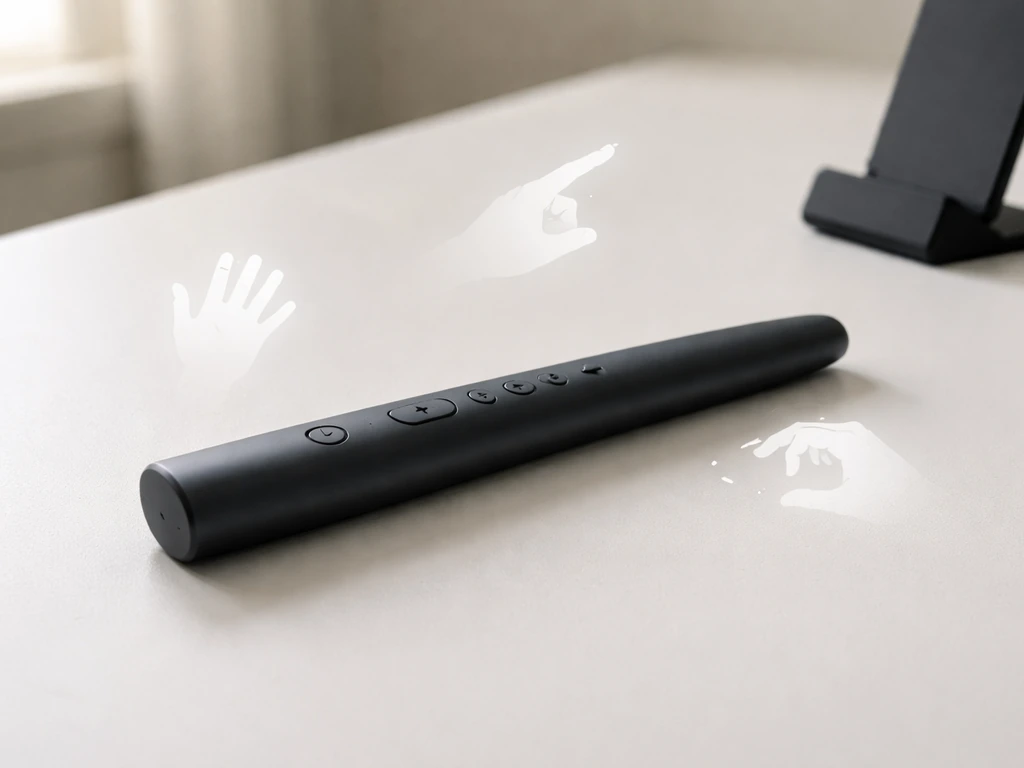
The phrase 'magic wand remote' is genuinely ambiguous if you come across it cold. It could refer to several things: a novelty TV remote shaped like a wand, a stage magic prop brand, a software product called Magic Wand, or even a Dragon investor's personal connection to a pitch. In the Dragons' Den context, though, there is one specific, well-documented answer: the Kymera Magic Wand, a gesture-controlled infrared universal remote control designed to replace your conventional TV remote with a wand you wave in the air.
The Kymera wand supports up to 13 separate gesture-based functions. You wave it left to change channels, flick it to turn the volume up, and so on. It learns infrared codes from your existing remotes, so it works with almost any home entertainment system. The product was sold through retailers including Firebox for around £49.95 to £49.99 at launch. The company behind it, The Wand Company Limited (Companies House number 06835090), was incorporated on 3 March 2009 and is still registered as active.
If you landed on this article wondering whether a Dragon investor personally holds a 'magic wand'-branded asset or whether there is a separate entertainment company called Magic Wand with a Dragons' Den connection, the short answer is no. The entity is The Wand Company, the product is the Kymera, and the Dragon involved was Duncan Bannatyne. Everything else is a different topic.
How Dragons' Den Net Worth Works in Practice
When people search for a 'Dragons' Den net worth,' they usually want one of two things: either the personal net worth of a Dragon investor, or the current valuation and financial health of a business that appeared on the show. For the Kymera story, the relevant question is the second one: what is The Wand Company worth today, and what does Duncan Bannatyne's investment tell us about that? If you are specifically looking for the Dragons' Den angle on this, the tan cream dragons den net worth figure is often discussed in relation to similar deals and valuations. If you specifically meant the show-related figure, the Dragons' Den net worth concept also applies to the overall business value behind deals like this one.
Net worth for a private company like The Wand Company is not a single published number. Instead, you reconstruct it from financial signals: filed accounts at Companies House (revenue, profit, total assets, liabilities), known investment deals and the implied valuation they carry, unit sales data, retail pricing, and any licensing or partnership announcements. For the Dragons and their personal wealth, the methodology is different and based on their own disclosed assets and business portfolios, which is a separate subject covered elsewhere on this site.
One important concept to get clear: a Dragons' Den deal offer implies a valuation at that moment, but it does not lock in the company's worth forever. When Bannatyne offered £200,000 for a 20% to 30% stake (the Wikipedia episode table records 30% equity in the deal), that implies The Wand Company was valued at roughly £667,000 to £1 million at the time of filming. But as the business grew, that implied valuation became outdated almost immediately, especially after the £1 million gross revenue milestone in year one.
The Kymera Wand's Dragons' Den Appearance, Broken Down
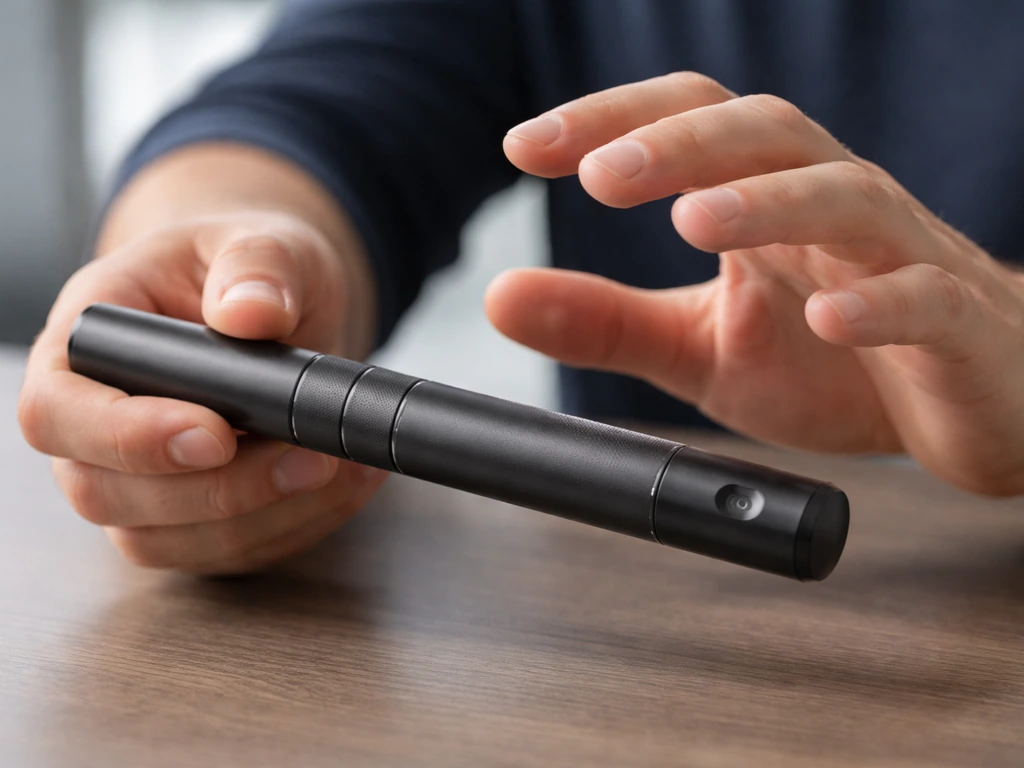
The pitch aired on 24 August 2010 in Series 8, Episode 7 of the BBC Two version of Dragons' Den. Barnardo and Blakesley walked in with their wand, demonstrated gesture control to the panel, and triggered what The Guardian described as one of the most successful pitches in the show's history. Multiple Dragons reportedly competed to invest, with Bannatyne ultimately securing the deal at £200,000.
What happened next is the interesting part. Within hours of the episode airing, Firebox reported a roughly 40-fold spike in Kymera wand sales. Big Think reported that over 10,000 wands sold in the first 10 weeks after launch, with projections of 200,000 units by end of 2010. A WebWire press release noted that 20,000 units had already been sold across the USA, Japan, and Russia by the time the company signed a new distribution deal with UK retailer Menkind.
Here is where the story gets a notable twist: by 2011, Duncan Bannatyne publicly stated that The Wand Company had grossed £1 million in its first year but that his investment did not actually proceed, because the company no longer needed the money by the time the deal came to be finalised. This is not unusual in Dragons' Den history. It means Bannatyne's stake, at least as originally structured, was not confirmed, and the equity split post-show may look very different from what was announced on camera.
How to Compute a Net Worth Estimate for The Wand Company
Working out a defensible number requires layering multiple signals on top of each other. Here is the methodology this site uses for private companies like this one.
- Start with Companies House filings (company number 06835090). The Wand Company is required to file annual accounts. From those you can pull total assets, net assets (assets minus liabilities), turnover if disclosed, and retained earnings. The next accounts are due by 31 December 2026, meaning recent filings are available for prior years.
- Apply a revenue multiple appropriate to a small consumer electronics and licensing business. For businesses of this type, a 1x to 3x annual revenue multiple on net revenue is a reasonable working range for private company valuation, adjusted downward for thin margins and upward for strong IP ownership.
- Factor in unit economics. With 10,000-plus units sold in the first year at roughly £50 retail, that is around £500,000 in retail sales value in year one alone. The Wand Company would receive a wholesale or manufacturer share of that, likely 40-60% of retail, so call it £200,000 to £300,000 in revenue in year one from Kymera alone.
- Account for post-2010 licensing revenue. The Wand Company has since released licensed products including Doctor Who sonic screwdrivers and, as recently as November 2025, a fully functional Fallout Pip-Boy 3000 remote control. Licensing deals with major IP owners like the BBC and Bethesda suggest meaningful ongoing revenue streams that significantly exceed early Kymera standalone sales.
- Discount for uncertainty. The Wand Company is private, so exact current revenue is not publicly confirmed. Any estimate carries meaningful error bars.
Corroborating Sources: What the Evidence Actually Shows

Pulling the available signals together into a picture gives you more confidence in the estimate range. Here is what is actually documented versus what is inferred.
| Signal | What It Shows | Confidence Level |
|---|---|---|
| Dragons' Den deal offer (£200,000 / 20-30% equity) | Implied valuation of £667K-£1M at time of pitch (2010) | High: documented by Wikipedia episode table and multiple press reports |
| Year-one gross revenue of £1 million | Strong early commercial traction; reported by Duncan Bannatyne in 2011 | Medium: secondary report, not yet verified against Companies House accounts |
| 10,000+ units in 10 weeks at ~£50 retail | Roughly £500K retail sales value; consistent with £1M gross figure | High: multiple independent sources (Big Think, WebWire) confirm unit numbers |
| Menkind distribution deal + USA/Japan/Russia sales | International distribution footprint, not just a UK novelty | High: WebWire press release from Menkind confirms details |
| Fallout Pip-Boy 3000 press release (November 2025) | Company still active and signing major licensed product deals 15 years after Den appearance | High: official company PDF press release |
| Companies House filing history (06835090) | Official accounts available; asset/turnover data can be extracted | Verifiable: publicly accessible on GOV.UK |
| Bannatyne investment did not proceed | Equity structure post-show unclear; founders likely retained full or near-full ownership | Medium: widely reported but not officially confirmed by Companies House filings |
The licensing angle is the most important factor in any current valuation. The Wand Company's ability to land official BBC Doctor Who and Bethesda Fallout licences suggests it is not a one-product gadget company that peaked in 2010. The Wand Company's later official press-release PDF includes announcements such as its fully functional Pip-Boy 3000 product, showing the company continued issuing official media after Dragons' Den blank" rel="noopener noreferrer">official BBC Doctor Who and Bethesda Fallout licences. It is a functioning IP-adjacent accessories business with ongoing royalty-generating partnerships. That materially changes the valuation ceiling compared to a company only selling the original Kymera wand.
For comparison, other Dragons' Den product businesses that appeared in the same era, including ones discussed elsewhere on this site like Boot Buddy and iGlove, tend to show a wide range of post-show outcomes. If you are also comparing other Dragons' Den product stories, you may want to check the Boot Buddy Dragons' Den net worth angle as well boot buddy dragons den net worth. Some readers also ask about iGlove Dragons' Den net worth, so the same approach to valuing post-show outcomes applies there too. Some grew into multi-million-pound operations; others stayed niche. The Wand Company's continued licensing activity and press releases through 2025 suggest it falls in the former category.
The Net Worth Estimate, the Range, and What We Don't Know
Given everything above, here is the most defensible estimate range for The Wand Company's net worth (meaning the net asset value or implied business value, not a personal net worth figure for the founders).
| Scenario | Assumed Annual Revenue | Multiple Applied | Estimated Business Value |
|---|---|---|---|
| Conservative (mature niche product, limited licensing) | £300K-£500K | 1.5x | £450K-£750K |
| Base case (ongoing licensing deals, active product line) | £1M-£2M | 2x | £2M-£4M |
| Optimistic (strong IP licensing pipeline, growing brand) | £2M-£3M | 3x | £6M-£9M |
The base case, a business worth somewhere between £2 million and £4 million, is the most defensible working estimate given the available signals. The Wand Company has documented year-one revenue of approximately £1 million, continued activity through at least late 2025, and a portfolio of high-profile licensed products that suggest sustainable revenue, not a one-hit flash in the pan. The optimistic scenario is not implausible given the Fallout and Doctor Who licensing relationships, but it would require confirmation from actual filed accounts.
The caveats are real, though. Bannatyne's investment not proceeding means the equity structure is unknown, and the founders' personal net worth derived from the company depends entirely on that structure plus any dividends or retained earnings they have taken over 15 years. The company has never been publicly valued through a funding round, an IPO, or a confirmed acquisition. All of this is reconstruction from public signals, not audited fact. A third-party “Dragons’ Den Investors” page (DragonsDenInvestors.com) makes additional claims that should be treated as unverified unless cross-checked against primary records not audited fact.
What You Can Do Right Now to Verify or Refine This
If you want to go deeper than this estimate, here are the practical steps you can take today to get closer to a verified number.
- Go to Companies House (find-and-update.company-information.service.gov.uk) and search for THE WAND COMPANY LIMITED, company number 06835090. Pull the most recently filed accounts. Look at the balance sheet (net assets), the profit and loss account (turnover and profit figures), and any notes on related parties or shareholder changes.
- Check the filing history for any significant events: changes in directors, share allotments, or mortgages/charges that might indicate new investment or financing activity since 2010.
- Search for press releases from The Wand Company directly (thewandcompany.com) to build a timeline of licensed products released after the Kymera. Each licensed product represents a separate revenue stream and a signal of the company's commercial health.
- Look for interviews with Chris Barnardo or Richard Blakesley in trade press (tech, gadget, or toy industry publications). Founders of Dragon-backed businesses sometimes disclose revenue milestones in trade interviews even when they do not publish formal press releases.
- Cross-reference third-party business databases (such as Beauhurst or Crunchbase for UK companies) to see if The Wand Company has taken any disclosed investment rounds beyond the Dragons' Den deal.
- Treat any figure from unofficial aggregators or Dragons' Den fan sites as a starting point for investigation, not a conclusion. Cross-check everything against Companies House and first-party sources.
The Wand Company is a genuinely interesting case in the Dragons' Den universe: a product company that generated serious early traction, apparently outgrew its investor before the ink dried on the deal, and then quietly built a licensing business around major entertainment IP for over a decade. If you are also comparing Duncan Bannatyne’s investing style and personal wealth, see the related “magic pizza dragons den net worth” discussion as an adjacent example Dragons' Den universe. The net worth story is less about a single Dragons' Den moment and more about what the founders built in the years that followed.
FAQ
Is “magic wand remote dragons den net worth” asking for the value of a specific wand product, or the company behind it?
No, and the safest way to avoid the mix-up is to treat “magic wand remote” as a product phrase and “net worth” as a question about The Wand Company Limited only. The Kymera wand is the product tied to the 2010 Dragons’ Den pitch, while Duncan Bannatyne’s personal wealth is a separate topic that depends on the deal’s final equity terms (which were later unclear).
Why can’t I use the £200,000 Dragons’ Den offer as the current net worth figure?
That £200,000 offer does not equal “the company’s net worth today.” It indicates an implied valuation only at the time of the pitch, and the article already notes the investment did not proceed as originally structured, meaning the eventual stake and capital structure may differ. Any current value needs updated signals like filed accounts, licensing indicators, and asset base, not the original offer.
If Kymera sold a lot right after the episode, why doesn’t that automatically mean the company’s net worth is huge?
Because the “post-show” unit sales surge can be misleading for valuation. Many remote and gadget pitches create initial demand, but long-term net worth depends more on recurring revenue like licensing, distribution margins, and continued product updates. In this case, the licensing relationships are the main reason the estimate range is higher than what a one-product gadget company would justify.
What specific signals should I check in records to validate the valuation range for The Wand Company?
If you want a rough verification check, look for three things in the company’s filings and public record: (1) direction of revenue over multiple years (not just the first year), (2) total assets versus liabilities (to support a net-asset view), and (3) whether there are notes suggesting discontinued lines or continued IP-related activity. If those signals show a shift toward royalty-based or licensed revenue, valuation assumptions become more defensible.
How does having Doctor Who and Fallout licensing change the way to estimate net worth?
Licensing does not guarantee profitability, but it changes what you should assume about growth and resilience. When a company earns royalties from major IP, valuation often follows cash generation and operating margin rather than one-off sales. The correct “next step” is to test whether the business retained earnings (or maintained assets) over time, since royalties can still be offset by marketing, royalties payable to rights holders, or distribution costs.
Did Duncan Bannatyne buy the Kymera wand personally, and does that drive the net worth story?
A common mistake is searching for a “Dragon’s personal asset” that never existed as a separate, titled item. The right approach is to separate (a) whether Bannatyne personally holds a share in the business, (b) whether dividends or retained earnings flowed to him, and (c) whether the deal was finalized on camera. Since the investment apparently did not proceed, personal stake assumptions should be treated as low-confidence without explicit post-deal documentation.
How should I handle conflicting equity details shown in episode summaries versus what was later stated?
Look for inconsistencies between “equity on camera” and “deal finalized.” Even when an episode table reports a percent stake, Dragons’ Den outcomes can change during final negotiations (terms, timing, or whether money actually transfers). For a defensible current number, you should assume the stake percentage could be different and focus on company-level indicators instead of investor-level assumptions.
When comparing to other Dragons’ Den products, what is the fairest way to avoid skewed net worth comparisons?
If you are trying to compare against other Dragons’ Den product stories, use the same framework: baseline sales traction only tells you about demand, while continued filings, distribution relationships, and licensing determine whether a niche product becomes a durable business. Avoid comparing “episode buzz” to “years of IP licensing,” because that skews valuation logic.
If the company is still active, does that mean the Kymera remote works with any TV, or are there compatibility gotchas?
Yes, device compatibility matters if your goal is practical ownership, not valuation. The Kymera learns infrared codes from existing remotes, so it depends on whether your home setup uses IR and whether the learning process supports your specific devices (some newer systems use Bluetooth or RF, not IR). Even if the business is licensed long-term, product capability constraints still affect user experience.
What is the most effective next step if I want a more “verified” net worth estimate than a broad range?
If your goal is a closer-to-verified number, prioritize the newest filed accounts and look for a clear view of profit, cash, and net assets in the most recent year. Then cross-check whether there were events like distribution changes, major licensing updates, or restructuring that would explain revenue shifts. Without those, any net worth figure stays an estimate range rather than a single confirmed number.
Next Article
Boot Buddy Dragons Den Net Worth: How to Estimate Accurately
Estimate the Boot Buddy Dragons’ Den net worth with a clear, sourced method, revenue assumptions, and update steps.