
The Lion King franchise is estimated to be worth somewhere between $10 billion and $15 billion when you account for everything: box office revenue, music rights, merchandise, licensing, stage productions, streaming, and related IP. The 1994 animated film alone crossed $1 billion in lifetime global box office, and the 2019 photorealistic remake grossed over $1.6 billion worldwide, making it one of Disney's highest-earning live-action remakes. Add decades of merchandise, a Broadway run that has earned well over $1 billion, and ongoing Disney+ streaming value, and you're looking at one of the most valuable entertainment franchises ever assembled under a single IP banner.
Lion King Net Worth: Franchise Value, Methods, and Estimates

Marcus Thorne
21 May 2026

What exactly counts as "The Lion King"

Before you can put a number on franchise value, you need a clear list of what's actually in the franchise. blank" rel="noopener noreferrer">Disney's own content ecosystem on Disney+ includes the 1994 animated original, the 2019 photorealistic remake, the direct-to-video sequels (The Lion King 2: Simba's Pride and The Lion King 3: Hakuna Matata), the animated TV series The Lion Guard, and the 2024 prequel Mufasa: The Lion King. blank" rel="noopener noreferrer">Disney Japan’s official entertainment hub lists Lion King titles in one unified catalog, covering the main films and related series included in its Disney+ lineup. Disney Japan's official entertainment hub lists all of these under a unified "Lion King" catalog, which is about as close to a rights-holder-defined boundary as you'll find in public documentation.
Unofficial franchise accounting (like the Disney Wiki and Wikipedia's franchise overview) also includes video games, educational shorts, theme park attractions, and the long-running Broadway and global stage musical. For the purposes of estimating franchise net worth, analysts typically fold in all of these. The stage musical in particular is significant enough that some valuations treat it as a semi-independent revenue engine rather than a simple line item. When you see a headline number like "The Lion King franchise is worth $X billion," it almost always includes theatrical, home video, streaming, merchandise, music, and live stage in some combination.
How analysts estimate franchise net worth (not just box office)
A franchise's net worth is not the same thing as its box office gross, and this distinction matters a lot. Box office is a gross revenue figure, meaning it doesn't account for production budgets, marketing spend, theatrical revenue splits with cinemas, or the costs of running a franchise over decades. Net worth, in the franchise context, is closer to an asset valuation: what would the full IP portfolio be worth if Disney were to license it, sell it, or spin it off today? If you are looking for a similar “net worth” breakdown for other figures in animation and entertainment, you can also compare how people estimate jushin thunder liger net worth. Analysts estimate this by projecting future cash flows from all active revenue streams, then applying a discount rate to bring those future earnings to a present value. Because Disney doesn't break out Lion King financials separately in its earnings reports, all public estimates rely on a mix of known figures and industry-standard assumptions.
The general methodology works like this: take confirmed revenue figures where they exist (box office grosses are publicly reported, Broadway weekly grosses are published by the Broadway League, and some licensing deal values become public through filings or press releases), then model out the less-visible streams (merchandise royalties, streaming licensing, international stage royalties) using industry margin benchmarks. The result is always a range, not a single number. When I report a figure like $10 to $15 billion for this franchise, that range reflects the real uncertainty in the methodology, not a lack of research.
Where the money actually comes from: revenue stream breakdown

Box office
The 1994 animated film grossed approximately $968 million worldwide in its original release and re-releases, adjusted to modern dollars. The 2019 remake crossed $1.656 billion at the global box office, making it the 7th highest-grossing film of all time at that point. Mufasa: The Lion King (2024) added to that total, grossing over $700 million globally. Combined, the theatrical films alone represent well over $3 billion in cumulative box office gross, before any other revenue is considered.
Music and soundtrack rights

The Lion King soundtrack is one of the best-selling animated film soundtracks ever recorded. The original 1994 album featuring Elton John and Tim Rice sold over 14 million copies globally and won the Academy Award for Best Original Score (Hans Zimmer) and Best Original Song ("Can You Feel the Love Tonight"). The 2019 remake produced a companion album featuring Beyonce, which debuted at No. 1 in multiple countries. Music rights, including master recordings, publishing royalties, sync licensing for commercials and TV, and streaming royalties, represent a long-tail income stream that continues generating value decades after release. Disney controls these rights as the IP holder, and they contribute meaningfully to franchise valuation.
Merchandise and licensing
Merchandise is where many entertainment franchises make their biggest money relative to production investment, and The Lion King is no exception. Disney Consumer Products handles global licensing for Lion King-branded toys, apparel, home goods, school supplies, and collectibles. Industry estimates suggest the franchise has generated several billion dollars in retail merchandise sales since 1994, with significant spikes around each major theatrical release and the ongoing popularity of Simba, Timon, and Pumbaa as evergreen characters in Disney's character licensing ecosystem. Because merchandise margins (royalty rates typically run 10 to 15 percent of retail) are high and production costs are minimal once IP is established, this stream contributes disproportionately to net worth calculations.
Stage productions
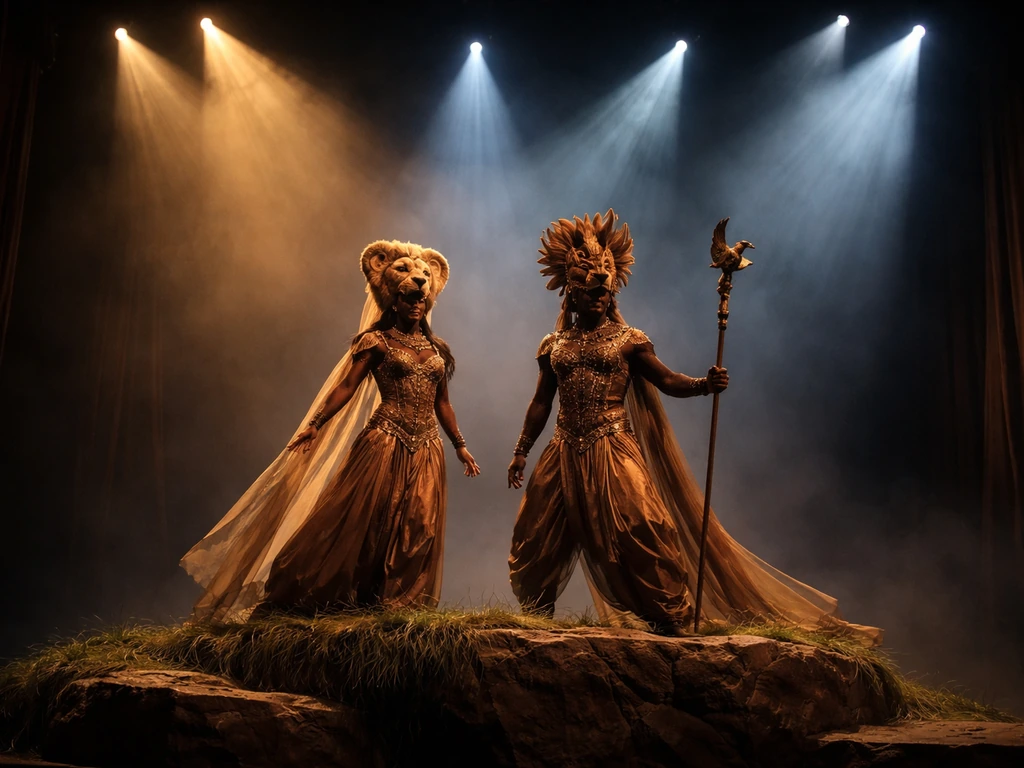
The Lion King Broadway musical, which opened in 1997, is one of the longest-running and highest-grossing stage productions in Broadway history. As of the mid-2020s, it has grossed well over $1.7 billion on Broadway alone, and the global touring and international productions (including the West End and productions across Europe, Asia, and Australia) add substantially to that figure. The total global stage revenue across all productions is estimated to exceed $2 billion. Disney Theatrical Productions retains the rights and produces or licenses these productions, meaning revenue flows directly back to Disney's entertainment division.
Streaming and home video
The Lion King catalog, including the original film, sequels, and The Lion Guard series, is a core part of Disney+'s content library. Disney doesn't report per-title streaming economics, but the franchise contributes to subscriber retention and is regularly used in Disney+ promotional materials. Before Disney+, home video (VHS, DVD, Blu-ray) generated hundreds of millions in direct sales and rentals. The franchise's transition from physical media to streaming represents a shift in how this revenue is captured, but the underlying value to the platform remains significant.
Theme parks and experiences
Lion King-themed attractions, live shows, and character experiences exist across Disney parks globally, including the Festival of the Lion King show at Walt Disney World's Animal Kingdom. These park experiences generate revenue through ticket sales and associated spending, and while Disney doesn't break out per-IP park revenue, the franchise's presence in high-traffic park areas contributes to its overall valuation as an active, monetized IP.
Rights and ownership: why this matters for valuation
The Lion King IP is wholly owned by The Walt Disney Company, which acquired it through internal development (the 1994 film was produced by Walt Disney Feature Animation). This is an important valuation factor: there are no co-production rights splits, no outside studio claims, and no complex licensing-back arrangements that would reduce Disney's effective ownership stake. The entire IP portfolio, including film rights, music rights, theatrical rights, merchandise licensing rights, and digital distribution rights, sits within Disney's asset base. This clean ownership structure means the full franchise value flows to Disney, unlike situations where rights are fragmented across multiple rights holders.
One nuance worth noting: Elton John and Tim Rice hold songwriting credits and receive publishing royalties on the original songs, and Hans Zimmer holds composer credits with associated royalties. These are not equity stakes in the franchise but rather contractual royalty streams that reduce Disney's net margin on music revenue. They don't meaningfully change the top-line franchise valuation figure but are relevant when calculating net returns. Similarly, the Broadway production involves separate agreements with the stage director, designers, and creative team through standard theatrical royalty structures.
Franchise total vs. individual movies: what's included and what isn't
When analysts report a franchise net worth figure, they're almost always aggregating across the full IP catalog, not just reporting what one movie made. The distinction between the 1994 film's stand-alone value and the full franchise value is significant. The original film, evaluated alone, would include only its theatrical gross, home video sales, and the music associated with that specific release. The franchise figure folds in the 2019 remake, Mufasa, the direct-to-video sequels, the TV series, Broadway, merchandise across all eras, and ongoing streaming contributions.
| Component | Estimated Contribution | Included in Franchise Net Worth? |
|---|---|---|
| 1994 animated film (theatrical) | ~$968M lifetime gross | Yes |
| 2019 photorealistic remake (theatrical) | ~$1.66B gross | Yes |
| Mufasa: The Lion King (2024, theatrical) | ~$700M+ gross | Yes |
| Direct-to-video sequels | Hundreds of millions in sales/rentals | Yes |
| Broadway and global stage | $2B+ estimated total | Yes |
| Merchandise and licensing | Several billion in retail sales | Yes |
| Music rights and royalties | Long-tail, ongoing | Yes |
| Streaming (Disney+) | Subscriber value, not per-title reported | Yes (modeled) |
| Third-party royalties to songwriters/composers | Reduces net margin | Deducted from net figures |
| Theme park experiences | Bundled in Disney Parks division | Partially modeled |
The key thing to understand is that no single public source reports a clean, audited "Lion King franchise net worth" figure. What you'll find are estimates that aggregate these components using different assumptions. Some sources focus only on box office and music, arriving at lower figures. Others include the full Broadway gross and merchandise, pushing the number much higher. When comparing estimates across websites, check which components are included before treating the numbers as comparable.
How reliable are these estimates?
Franchise net worth figures for entertainment properties like The Lion King are always estimates, and being honest about that is part of responsible reporting. Some inputs are solid: theatrical box office grosses are publicly reported by box office tracking firms and studios, Broadway weekly grosses are published by the Broadway League, and major licensing deal values sometimes surface in trade press or financial filings. But the majority of merchandise revenue, streaming economics, and international stage royalties are not publicly reported at the title level.
Disney reports its financials in consolidated segments (like Disney Entertainment and Disney Parks), not by individual franchise. That means even professional analysts at investment banks are working with modeled estimates when they try to put a number on a single IP. The methodology I use, and that most credible entertainment finance sources use, is to layer confirmed figures with benchmarked assumptions, clearly label which is which, and present a range that reflects genuine uncertainty. A range of $10 to $15 billion for The Lion King franchise reflects real variability in how you model streaming value and merchandise margins, not vagueness. These kinds of franchise net worth estimates are often summarized as a specific The Lion King net worth figure, such as Galadon net worth.
Be skeptical of any single precise figure presented without methodology. A source that says "The Lion King is worth exactly $12.3 billion" without explaining its inputs is likely working backward from a desired headline. Reliable estimates will either show their work or acknowledge the range involved.
How to verify, compare, and track this going forward
If you want to stay current on The Lion King franchise's financial standing, here are the most useful steps you can take.
- Track Disney's quarterly earnings reports: Disney's investor relations page publishes quarterly results, and while individual franchise figures aren't broken out, major box office milestones and streaming metrics are often discussed in earnings calls. When a new Lion King film releases, watch the earnings calls in the quarters following release.
- Monitor box office tracking sites: Sites like Box Office Mojo and The Numbers publish running lifetime grosses for individual films, which is the most reliable public data point for the theatrical component of franchise value.
- Check the Broadway League's weekly grosses: For the stage musical component, the Broadway League publishes weekly gross figures for all Broadway productions. This is free public data and gives you a real-time read on the stage revenue stream.
- Watch trade press for licensing deal disclosures: Publications like Variety, The Hollywood Reporter, and The Wrap occasionally report on major merchandise or licensing deal values, especially around franchise reboots or major theatrical releases.
- Compare to similar franchise estimates: Putting The Lion King in context against other Disney franchises (like The Little Mermaid or Aladdin) or against broader entertainment franchise rankings helps calibrate whether an estimate is in the right ballpark. Entertainment franchise valuation databases occasionally publish these comparisons.
- Revisit estimates after major releases: Franchise net worth figures should be updated after significant events, like Mufasa's theatrical run finishing and its Disney+ debut, or if a new stage production is announced. Static figures from a few years ago may understate current value.
For broader context, it's worth noting that entertainment franchise valuations are a growing area of interest across very different types of IP, from major studio properties like The Lion King to individual content creator brands and niche entertainment companies. If you are also curious about how net worth estimates look for smaller, creator-driven brands, you can compare this approach to broken lizard net worth billion-dollar Disney franchise. The methodology principles are similar whether you're evaluating a billion-dollar Disney franchise or something smaller, and building a habit of checking inputs and demanding ranges over single figures will serve you well across all of them.
FAQ
When people say “lion king net worth,” do they mean cash Disney has, or the value of the IP?
It usually means the value of Disney’s monetizable rights across the full catalog (films, music, merchandising licensing, stage, and digital distribution), not what you could “cash out” immediately. To sanity check, ask whether the estimate includes only revenue-to-date, or also projects future licensing and renewal value using a discount rate.
Why do different sites give very different “lion king net worth” numbers?
Yes, but the biggest driver is scope. A box office-only number can miss high-margin merchandise, long-tail music royalties, and the ongoing touring and international stage licensing that can materially change totals. If a source does not list what revenue streams it includes, treat the figure as non-comparable.
How do music royalties (songwriting and composer credits) affect lion king net worth estimates?
Music rights can be overstated or understated depending on whether the estimate assumes publishing and composer splits are fully netted out. Songwriting (Tim Rice, Elton John) and composer (Hans Zimmer) royalty streams reduce Disney’s margin on certain music revenue, but they generally do not change the top-line franchise range as much as whether merchandise and stage are included.
How do analysts estimate Disney+ value for the lion king franchise if there are no per-title streaming reports?
Streaming is the hardest piece because Disney does not report per-title profit. Most “net worth” models estimate value using subscriber retention impact, promotional usage, and licensing-like benchmarks, then convert that into present value. If a source claims streaming economics as a precise number without explaining assumptions, it is likely guesswork.
Does lion king net worth include the Broadway and touring musical revenue, or just film and merchandise?
Sometimes, but it depends on whether the valuation treats stage as a one-off production business or as an enduring IP cash-flow. Many models include Broadway and global touring receipts, and may also account for royalty structures and the longevity of productions. If you see a low figure, it often means stage is excluded or only partially counted.
Do lion king net worth estimates include VHS, DVD, and Blu-ray sales, or is it mainly streaming and merchandising?
Home video is usually included indirectly via historical sales, but modern estimates may treat physical media as already captured and focus more on ongoing licensing and streaming. A source that ignores home video altogether can be slightly low, while one that double counts revenue across eras will be high.
Are theme park attractions and experiences part of lion king net worth, and how do estimates avoid double counting?
Yes, and it is a common mistake. Park-related spend is often influenced by the brand but is not typically reported as “Lion King profit” in Disney’s segment reporting. Valuations that include theme park contributions should be explicit about whether they use a modeled allocation based on attendance, show placement, and guest spend.
Why does ownership concentration matter for lion king net worth calculations?
The cleanest scenario is when a single owner controls the IP stack. In this case, Disney is the IP holder with ownership concentrated under the Walt Disney Company, which simplifies attribution and reduces partner splits. Lower-quality estimates sometimes fail to reflect that there are fewer rights-holder fragmentation issues for this franchise than for many entertainment brands.
How is lion king net worth different from total box office gross?
Not the same way. Box office is gross theatrical revenue, it does not subtract budgets, marketing, or exhibitors’ cuts. Net worth style estimates are closer to an asset valuation concept, often using modeled margins and future cash flows discounted to present value, which is why two numbers can be far apart even for the same release.
What red flags should I look for when comparing lion king net worth figures across websites?
Watch for “component transparency.” Reliable estimates typically indicate which streams are included (merchandising royalties, music, stage, streaming value method) and whether the result is a modeled range. A source that gives a single precise number without inputs, or that compares numbers without matching included components, is usually not doing an apples-to-apples calculation.
Next Article
Pillar Learning Net Worth: Estimate, Drivers, and Updates
Estimate Pillar Learning net worth with a clear entity check, credible methods, driver breakdown, and update steps