
Tennessee Wraith Chasers (TWC) as a group most likely sit in the $1 million to $3 million net worth range in 2026, when you factor in multi-year television earnings, YouTube ad revenue, a packed live-event tour, and merchandise sales. That is a group-level estimate, not the personal fortune of any single member. The individual members, Chris Smith, Steven McDougal, Scott Porter, Brannon Smith, and Mike Goncalves, each have their own financial picture, and public data is not granular enough to assign hard numbers per person. What we can do is build a transparent, evidence-based range for the brand itself and explain every assumption behind it.
Tennessee Wraith Chasers Net Worth Estimate and Breakdown

Marcus Thorne
24 Jun 2026
Who Tennessee Wraith Chasers are (and what 'net worth' actually means here)
Tennessee Wraith Chasers is a paranormal investigation team from Tennessee, best known as the cast of the Travel Channel series Ghost Asylum, Haunted Towns, and Haunted Live. The group describes itself as professional paranormal investigators with a signature approach of attempting to trap and contain ghosts rather than simply document them. Ghost Asylum ran for multiple seasons and gave them their biggest national platform. Haunted Towns followed, and in 2018 they moved into live interactive territory with Haunted Live (also referenced in some coverage as Ghost Hunt Live), a weekly series where viewers guided investigations via social media in real time.
On this site, 'net worth' means estimated total accumulated wealth: assets minus liabilities. It is not annual income, and it is not a salary figure. When you read that TWC is worth somewhere between $1 million and $3 million, that is a snapshot of what the brand and its primary members are likely worth today after years of earning and spending, not what they make per year. If you are searching for slayer net worth, this brand-level range is the closest published-style estimate you can use without member-by-member financial disclosures. Annual revenue is one input into that calculation, but the two numbers are very different things.
Best current net worth estimate and how it's calculated

The $1 million to $3 million range comes from layering several income streams across roughly a decade of activity. The lower bound assumes conservative YouTube RPM, modest merchandise revenue, and limited post-TV residual income. The upper bound assumes stronger TV licensing fees, solid live-event revenue across multiple tour years, and consistent sponsorship deals. Neither figure is official; TWC has not disclosed financials publicly. This is a research-based model, and the methodology matters as much as the number itself.
For the YouTube component, tools like Social Blade use an RPM (Revenue Per Mille, meaning per 1,000 views) range of roughly $0.25 to $4.00 to generate estimates. That is a wide band, and the real figure depends on the channel's niche CPM, audience geography, and the mix of ad formats served. Paranormal content typically lands in the lower-to-mid range of that spectrum. It is worth stressing that Social Blade's estimates are acknowledged even by the platform itself as rough approximations based on public averages, not actual analytics. They also exclude everything outside YouTube: brand deals, merch, ticket sales, and TV fees. So treat the YouTube number as a floor, not a ceiling.
Where the money actually comes from
Television fees and licensing
This is almost certainly the largest historical income source for the group. Multi-season runs on Travel Channel across Ghost Asylum, Haunted Towns, and Haunted Live represent the bulk of early-career earnings. Reality television cast fees for a paranormal ensemble like TWC typically range from a few thousand dollars per episode at the lower end to mid-five-figures per episode for established casts with strong ratings. The group ran enough seasons that cumulative TV income alone could push well into six figures and potentially beyond, depending on episode counts and negotiated rates.
YouTube and platform ad revenue
TWC maintains a YouTube presence that supplements the TV brand. Ad revenue here is real but secondary. Using the Social Blade RPM framework as a transparent starting point, a channel with consistent paranormal content can generate anywhere from a few hundred to a few thousand dollars per month depending on view volume and audience engagement. Over several years that compounds into a meaningful cumulative figure, but it is not the financial engine of the brand. It is more of a steady baseline.
Live events and the Wraith Tour
This is arguably the most interesting revenue signal right now. The Wraith Tour 2026 is a multi-date live event series, and the official events page shows multiple dates marked as sold out, including the Exchange Hotel in June and several July and August dates. Ticket pricing is documented: a Weekend Ghost Hunt at The Palmer House was listed at $199 per person, with a Q&A Meet and Greet Only option at $25.
If a sold-out event draws even 50 to 150 attendees at $199 each, that is $9,950 to $29,850 gross per event before costs. Across a full tour of a dozen-plus events, live appearances represent a serious income stream, likely in the low-to-mid six figures annually in a strong year.
Merchandise
TWC runs at least two active merchandise channels. The official store at thewraithchasers. com lists items including a $25 tee, a $40 hoodie (on sale at $25 at time of research), and a $20 license plate.
A separate Bonfire storefront adds another distribution channel with named collections like 'Wraith Raff' and 'Tennessee Chapter. Bonfire hosts an official merchandise store for “Wraith Chasers” with named collections, supporting the idea that the brand has more than one merch channel.
' Merchandise income for a paranormal brand of this size is typically modest compared to TV or events, but it is consistent passive revenue that benefits from tour traffic and new content drops. A net worth estimate for the film character also draws on how popular the franchise is and what the actor has earned from related projects paranormal brand.
Sponsorships and brand deals
Brands targeting paranormal, outdoor, and horror audiences are a natural fit for TWC. Sponsorship deals in this niche can range from a few hundred dollars for a small YouTube integration to several thousand for a dedicated episode-style placement. These deals are not publicly disclosed, so they are modeled as a supplemental line rather than a primary driver. Still, even one or two solid brand partnerships per year adds meaningfully to annual income over time.
How the brand got here: career timeline and growth moments
TWC's financial trajectory tracks closely with their television platform. Ghost Asylum was the launch pad, introducing the group to a national cable audience on Travel Channel and establishing the 'ghost trapping' premise that made them distinctive in a crowded paranormal TV space. Haunted Towns expanded the concept to new locations and deepened their fan base. The 2018 pivot to live interactive content with Haunted Live (and the parallel Travel Channel project Ghost Hunt Live) was a significant inflection point: it signaled that the group understood the value of real-time audience engagement and was willing to build a community around the brand, not just a viewership.
The live events business appears to have grown meaningfully in the years since. The Wraith Tour 2026 is not a debut effort; sold-out dates and premium ticket pricing suggest a fan base that is actively spending money on in-person experiences. That kind of loyalty is hard to build and represents durable earning power even as TV deals fluctuate. The social media footprint, including presence across Instagram, Twitter, and Facebook for members, has supported this community-building over time.
What they spend: production costs, gear, travel, and team
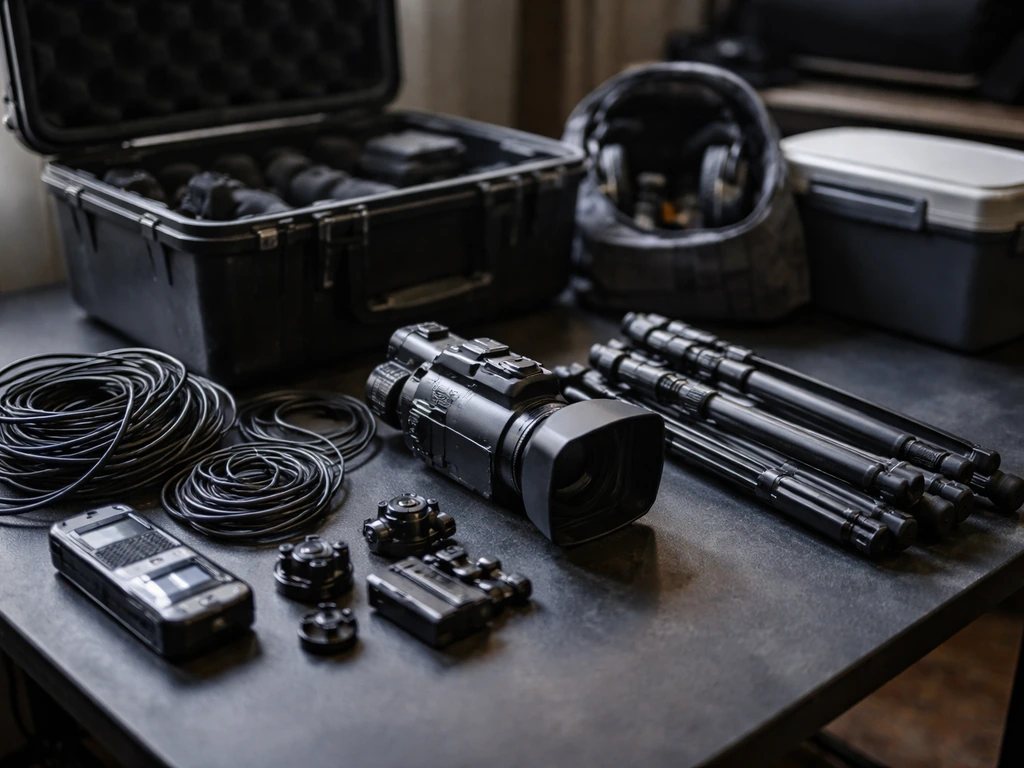
Understanding net worth requires thinking about costs, not just revenue. TWC is a production-heavy brand. Paranormal investigation content requires night-vision cameras, audio equipment (EVP recorders, spirit boxes, thermal imaging), and reliable video editing infrastructure. A professional-grade setup for a group of five can run $10,000 to $50,000 in equipment, with ongoing replacement and upgrade costs.
Travel is a major expense. Haunted Towns-style content means visiting locations across the country, which means flights, accommodations, location permits, and liability arrangements for historic or private properties. A multi-location season can run $20,000 to $100,000 or more in travel and location costs alone, though television productions typically offset much of this through production budgets. For self-funded YouTube or event content, those costs fall on the group.
Running a live tour adds logistics: venue deposits, insurance, staffing for event operations, promotional materials, and travel for five cast members plus any support crew. These costs are real and eat into the gross ticket revenue. A $199 ticket event does not produce $199 in profit per attendee. A realistic margin for a self-run paranormal live event might be 30 to 50 percent of gross after all costs, meaning a $20,000 gross event nets $6,000 to $10,000.
Earnings vs. net worth: what the estimates can and can't tell you
The most important thing to understand about any net worth estimate for a group like TWC is that it is a model, not a measurement. If you are specifically looking for death grips net worth figures, you can use the same signals-based approach: estimate income streams, subtract costs, and be cautious with unofficial data. There is no public financial disclosure. No audited balance sheet. No SEC filing. What we have is a set of observable signals: television credits, documented merchandise pricing, live event ticket costs, sold-out tour dates, and platform presence. We layer those against reasonable industry assumptions and arrive at a range.
The $1 million to $3 million range reflects that uncertainty honestly. Tennessee Wraith Chasers' estimated net worth is often discussed alongside other horror entertainment figures, including Cannibal Corpse, so it's helpful to compare how public signals translate into wealth Cannibal Corpse net worth. The group has been active for roughly a decade with sustained television exposure, a growing live events business, and multiple merchandise channels. That is a profile that supports seven-figure cumulative earnings at minimum. The upper end of the range requires stronger assumptions: higher TV fees, consistent tour profitability, and meaningful sponsorship income over multiple years. Neither extreme is speculative in an unreasonable way; both are grounded in what public evidence supports.
One more important note: this is a group net worth estimate. Splitting it equally among five members would suggest individual wealth of roughly $200,000 to $600,000 each, but real distributions are never that clean. For example, technoblade net worth at death is often discussed through reported assets and public records, but exact figures are rarely confirmed. Leadership roles, contract structures, and individual deals all affect how income flows to each person. If you are researching a specific member of TWC, the honest answer is that individual breakdowns are not publicly available with enough data to support per-person estimates.
How TWC compares to similar entertainment-adjacent earners

For context, TWC sits in an interesting middle tier of entertainment-connected wealth. This kind of modeling is what leads people to search for the corpsegrinder net worth figure in the first place. They are not global recording acts or gaming megastars with equity stakes and global licensing, but they are also well beyond the typical independent YouTube creator. Their television platform gave them a head start that pure digital creators rarely get. The combination of TV, live events, and community merchandise is a model that many smaller entertainment properties aspire to but few execute as consistently. It is a comparable arc to other niche entertainment figures who have built durable brands around a specific subculture.
| Income Source | Estimated Annual Range | Confidence Level |
|---|---|---|
| TV fees / licensing (active seasons) | $50,000 – $250,000+ | Moderate (niche not disclosed) |
| YouTube ad revenue | $5,000 – $30,000 | Low-moderate (RPM model only) |
| Live events / Wraith Tour | $50,000 – $200,000 gross | Moderate-high (ticket pricing documented) |
| Merchandise (all channels) | $10,000 – $50,000 | Low-moderate (volume unknown) |
| Sponsorships / brand deals | $10,000 – $50,000 | Low (not publicly disclosed) |
These ranges are annual estimates during active periods. Net worth accumulates these over years, minus costs and personal expenses. If you are also looking at other creators, comparing their vampire survivors net worth benchmarks can give you a clearer sense of scale Net worth accumulates these over years. The table is meant to show the proportional weight of each stream, not to be read as a precise income statement. Television and live events are clearly the heavy lifters; YouTube and merchandise are supporting revenue that builds brand value over time.
FAQ
Is the “$1 million to $3 million” figure the same thing as their yearly income?
Yes, but be careful about what you are comparing. “Net worth” is accumulated wealth (assets minus liabilities), while “how much they make” is usually annual cash flow (revenue minus expenses). A group can have strong yearly revenue but still have limited net worth if a large share goes to production costs, taxes, staffing, and travel, or if purchases and liabilities offset profits.
How can I sanity-check the net worth estimate using the tour details?
You can rough-check it by modeling event profit, not ticket gross. For example, even if a ticket is $199, a self-run tour typically has costs for venue deposits, insurance, staff, lodging, and marketing. Using a 30% to 50% net-to-gross assumption (as the article does) is one way to test whether live events alone could plausibly support a seven-figure cumulative range.
Why can’t we estimate each Tennessee Wraith Chasers member’s net worth from the same signals?
Net worth can swing if the group is contractually structured so that TV, sponsorship, and merchandise revenues are paid to one entity (or split unevenly among members) rather than equally to each cast member. Without disclosures, member-by-member net worth is not reliably inferable from public episode appearances or social followings.
How reliable are YouTube RPM estimates for predicting Tennessee Wraith Chasers net worth?
Social Blade-style RPM estimates should be treated as a lower-to-mid range indicator, not a precise earnings report. Ad RPM can change with seasonality, audience location, video topic intensity, and ad format mix. Also, YouTube earnings are only one slice, and brand deals, tour revenue, and TV licensing can dominate totals.
Do taxes and business liabilities change how we should interpret a net worth range like $1M to $3M?
They likely have some tax and liability drag that a simple revenue model ignores. For example, income from tours and sponsorships can carry higher write-offs for travel, equipment rental, insurance, and legal costs, and self-employed or pass-through structures change how much “profit” becomes personal wealth.
What about VIP upgrades or add-ons, do they materially change the estimate?
Yes. If viewers also purchase VIP upgrades, meet-and-greet add-ons, or higher-tier experiences, gross ticket revenue can be higher than the baseline ticket price. However, those upgrades also increase operational complexity and staffing needs, so net profit does not scale one-to-one.
How do TV residuals or re-runs affect the net worth trajectory over time?
Your largest uncertainty factor is how much of TV value is ongoing residual income versus a one-time or short-lived cast fee. If the group receives minimal residuals, most value concentrates in the original run years. If licensing and residuals continue longer, net worth can grow even when new episodes slow.
Does a sold-out tour date guarantee high profits and therefore higher net worth?
A sold-out status signals demand, but it does not confirm profitability. You still need assumptions about capacity (attendees per date), whether dates were fully sold at the listed price, and how many events were self-funded versus supported by partners. Different venue costs and staffing loads can turn a “sold-out” event into a modest or strong profit year.
Is merch revenue big enough to matter, or is it mostly supplemental?
Merch can be meaningful, but it is often lower margin than people assume. Inventory costs, shipping, returns, platform fees (especially on third-party storefronts), and production lead times can reduce net revenue. The best indicator is whether merch sales are consistent month over month, not just a few viral items.
Is it reasonable to split the net worth estimate evenly among five members?
Be cautious if the content includes multiple “hosts” who are also members of the production company. In some cases, lead figures may receive a larger share due to ownership, contract terms, or creative control, so dividing the group estimate by five can mislead significantly.
What’s the best way to refine this estimate without pretending we have internal financials?
Use a range-based approach rather than seeking one “correct number.” If you want a more personalized estimate, pick a scenario (conservative, base, optimistic) and adjust only one variable at a time, such as event profit margin or TV residual strength, so you can see what actually moves the total.
Why do net worth comparisons to other horror entertainers sometimes feel inconsistent?
If you are trying to compare Tennessee Wraith Chasers net worth to another horror or entertainment figure, the biggest trap is mismatched business models. A band’s income may be tour-heavy with royalties, while a TV-led group can have licensing and media residuals. Compare revenue streams and cost structure, not just headline “net worth” numbers.
Next Article
Vampire Survivors Net Worth: Who Earns What and How to Estimate
Estimate Vampire Survivors net worth by tracing sales, platforms, pricing, DLC, and fees, with disambiguation and update