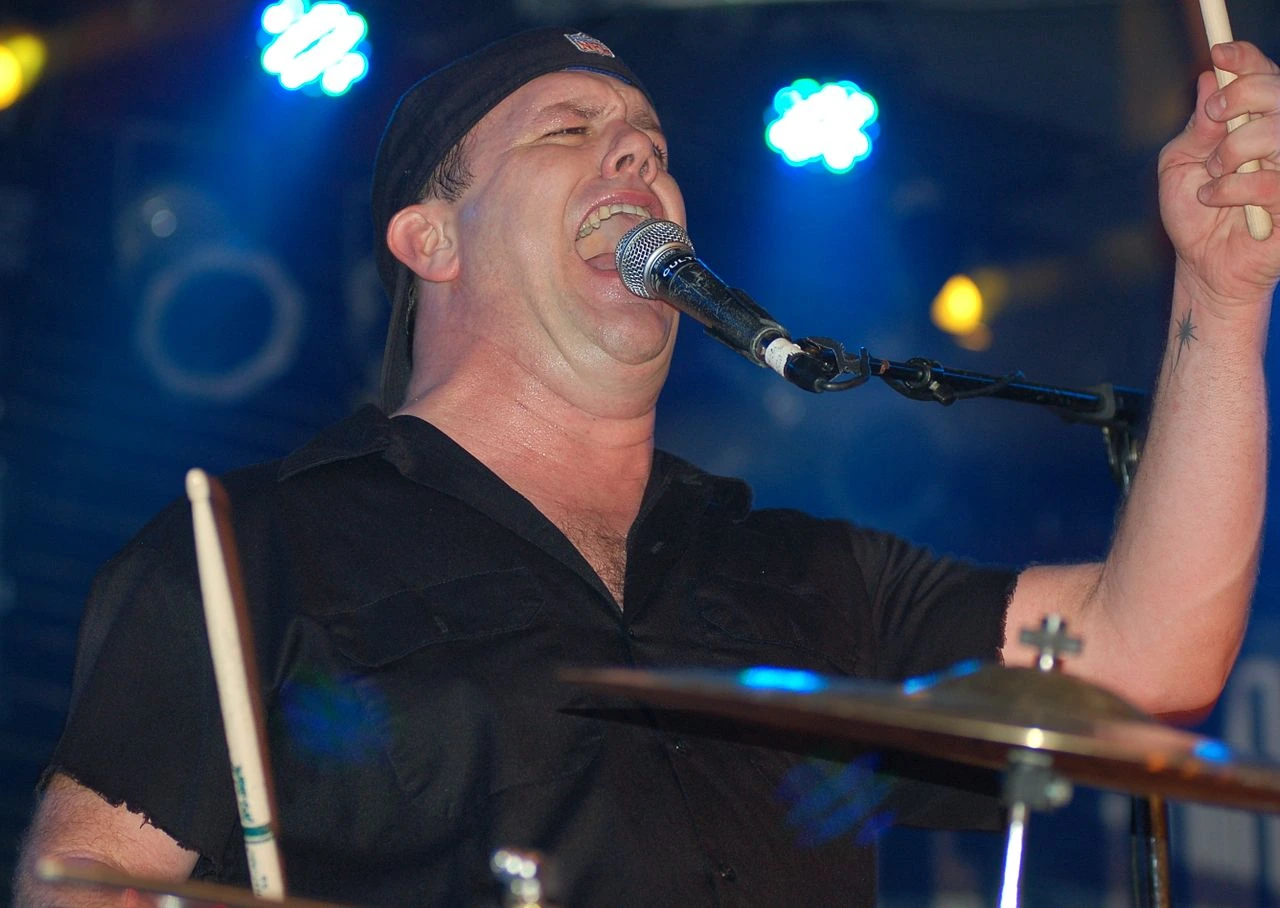
The name itself comes from an actual phrase. Both the band's own website and Wikipedia confirm that 'cowboy mouth' is defined as 'one with a loud and raucous voice,' a description that fits the group's stage presence perfectly. The phrase is also tied to a 1971 one-act play co-written by Sam Shepard and Patti Smith, which occasionally causes confusion in search results. You may also see Sam Shepard pulled up in net worth searches because of his connection to the phrase, but his finances have nothing to do with the band. When this article talks about Cowboy Mouth net worth, the subject is strictly the rock band.
The current net worth estimate

As of March 2026, the most credible working estimate for Cowboy Mouth's collective net worth sits in the range of $1 million to $5 million, reflecting the financial profile of a regionally successful, career-active rock band with decades of touring, a recognizable catalog, and no major mainstream commercial breakthrough beyond the mid-1990s. This is a band-level estimate, not an individual member figure.
It is worth addressing the wildly inflated numbers that circulate online. One aggregator site (People AI) lists Cowboy Mouth's net worth at figures like $303 million for 2025 and $243 million for 2023. These numbers are not credible. They appear to be algorithmically generated without any basis in documented earnings, label deal disclosures, or credible financial reporting. No independent source supports figures anywhere close to that range for a regional rock act that has not had a platinum-certified album. Treat those numbers as noise, not data.
The $1M to $5M range is a realistic estimate based on roughly three decades of active touring, catalog royalties from a reasonably well-distributed discography, and the kind of steady regional and festival income that characterizes a working band at Cowboy Mouth's level. For context on how other similar artists are valued, see how the peer range is discussed here estimated net worth. Individual member wealth, particularly Fred LeBlanc's as the primary songwriter, may reflect a larger personal share due to publishing royalties.
How Cowboy Mouth built their wealth
Cowboy Mouth's financial story is really about a band that chose the road over the mainstream pop machine, which has a specific financial shape: moderate label-era income in the 1990s, consistent touring revenue for decades, and modest but durable royalty income from a catalog that fans genuinely love. Cowboy Mouth's non-affiliate venue/promoter page at First Avenue repeats these same high-level career metrics from the band's bio, including that they have sold over a half a million albums domestically, performed before more than 10 million people, played over 3,000 concerts, and frequently average 250 gigs a year. Here is how the timeline played out.
Early years and the MCA deal

The band's major-label debut, 'Are You with Me?,' was released on July 2, 1996 through MCA Records. It charted at #192 on the Billboard 200, which is modest by major-label standards, but the album produced 'Jenny Says,' which hit #26 on Billboard's Mainstream Rock Tracks chart and #33 on Modern Rock Tracks in 1997. A top-30 mainstream rock single on a major label translates to real radio royalties, promotional budgets, and increased touring leverage. Fred LeBlanc wrote the song, meaning he would have collected both the performer's share and the songwriter's publishing share, a meaningful income distinction.
The Atlantic/Blackbird era
The band's album 'Easy,' released June 27, 2000, was distributed through Blackbird Recording Company and Atlantic Records. Moving from MCA to Atlantic (even through an intermediary label) represents a continued major-label relationship, which typically means better distribution reach but also a revenue split that favors the label over the artist on mechanical royalties. Still, Atlantic's distribution infrastructure would have supported more substantial streaming-era backend income once catalog licensing expanded.
Post-Katrina resilience and independent releases

'Voodoo Shoppe' was the first album the band produced after Hurricane Katrina devastated New Orleans, making it a notable milestone both emotionally and commercially. As a New Orleans-identified band, the post-Katrina period brought renewed regional attention and media coverage that likely supported short-term touring and merchandise income. Later releases shifted toward independent distribution, which typically means smaller upfront advances but higher per-unit royalty percentages for the artist.
The revenue streams behind the number
Understanding where a band like Cowboy Mouth actually makes money requires looking at each revenue category separately, because the mix is very different from a pop act or a streaming-native artist.
- Touring and live performance: This is almost certainly the dominant income source across Cowboy Mouth's career. The band has logged hundreds of shows over three decades, headlined major festivals including Jazz & Heritage and Voodoo Music Fest, and opened for arena-level acts like Hootie & the Blowfish during their commercial peak. Concert Archives documents active show history extending into 2026, confirming the band continues to tour.
- Songwriting and publishing royalties: Fred LeBlanc wrote 'Jenny Says,' 'Easy,' 'Tell The Girl,' 'How Do You Tell Someone,' and other catalog staples. Public performance royalties (collected through ASCAP or BMI) on songs that still receive radio play, streaming, or sync placements represent recurring passive income that persists long after a record cycle ends.
- Streaming income: Cowboy Mouth's catalog is available on major streaming platforms. 'Jenny Says' in particular benefits from 1990s nostalgia playlists, which drive modest but consistent stream counts. At current streaming payout rates, a song with hundreds of thousands of streams per year generates a few hundred to low thousands of dollars annually, not life-changing, but cumulative across a catalog.
- Merchandise: A band with a dedicated live following generates real merchandise income at shows. While no public figures exist for Cowboy Mouth's merch revenue, a touring act of this profile typically earns several thousand dollars per tour cycle in merchandise sales.
- Sync licensing and media placements: 'Jenny Says' and other catalog tracks carry real sync potential for film, TV, and advertising. Any confirmed placements would represent one-time fees plus ongoing performance royalties, though no specific deals are publicly documented.
- Label deals and advances: The MCA and Atlantic-era deals would have involved recording advances that were recoupable against royalties, meaning the band had to earn back those advances before seeing additional royalty checks. Independent releases post-recoupment typically generate cleaner income streams.
Major financial milestones worth knowing
A few specific moments in Cowboy Mouth's career stand out as likely contributors to their cumulative financial picture.
- 1996: Major-label debut on MCA with 'Are You with Me?' gives the band national distribution and a mainstream promotional budget for the first time.
- 1997: 'Jenny Says' reaches the top 30 on Mainstream Rock Tracks, generating radio play royalties and boosting touring rates as radio recognition increases booking leverage.
- Late 1990s: Opening slots on Hootie & the Blowfish's arena tour exposed Cowboy Mouth to audiences of tens of thousands per night, a massive boost for name recognition and future ticket sales.
- 2000: 'Easy' released through Atlantic/Blackbird, continuing a major-distribution relationship and expanding catalog depth.
- Post-2005: 'Voodoo Shoppe' release as the first post-Katrina album brings renewed media attention and regional support at a moment when New Orleans culture was in the national spotlight.
- Ongoing: Headlining appearances at Jazz & Heritage Festival and Voodoo Music Fest, two of New Orleans' most high-profile events, confirm sustained festival-level booking rates well into the band's later career.
- 2026: Active touring documented on Concert Archives, confirming the band continues to generate live income through the present.
Why the estimates are genuinely hard to pin down
Cowboy Mouth is a private entity. The band has never been publicly traded, never filed disclosures that would reveal income, and its members have not given detailed financial interviews. That means every net worth estimate, including the one in this article, is built on inference rather than confirmed data.
The specific challenges include: label contract terms are not public, so the exact royalty split between the band and MCA or Atlantic is unknown; publishing ownership details (whether LeBlanc retained full publishing rights or sold any portion) are not confirmed; touring income depends on deal structures with venues and promoters that are rarely disclosed for acts at this level; and streaming royalties are split between the record label and the artist in proportions that vary by contract era. For a band that signed major-label deals in the 1990s, it is common for labels to retain a significant share of master recording royalties even on catalog income decades later.
Additionally, the 'band net worth' framing combines assets across multiple individuals (LeBlanc, Griffith, and other members at various career stages), which is a rough aggregation rather than a precise financial figure. Fred LeBlanc's personal net worth as the primary songwriter and longest-tenured member almost certainly differs from that of newer or part-time members. Readers interested in individual-member breakdowns should look for member-specific profiles where available, since the band-level estimate smooths over those differences.
How to verify or update this estimate yourself
If you want to refresh this number or cross-check it, here is a practical methodology for doing so, using the kinds of sources that credible net worth research actually relies on.
- Discography and label history: Start with the Wikipedia discography page for Cowboy Mouth and cross-reference with AllMusic, which provides consolidated release dates, label information, and genre context. Label affiliations (MCA, Atlantic/Blackbird, independent) help you reason about royalty split structures by era.
- Touring income proxy: Concert Archives maintains an updated show history for Cowboy Mouth including 2026 dates. Count active show years and estimate average shows per year, then apply a rough headliner rate for regional acts ($5,000 to $25,000 per show depending on venue size) to build a low/high touring income range across the career.
- Streaming and catalog data: Check Spotify, Apple Music, and similar platforms for monthly listener counts and catalog depth. Tools like Chartmetric or Soundcharts (industry-grade, but with free tiers) can give you a historical streaming trajectory. Cross that with known per-stream payout rates to estimate annual streaming income.
- Festival booking context: Pollstar covers Cowboy Mouth's festival headlining history, including Jazz & Heritage and Voodoo Music Fest appearances. Headlining mid-tier festival slots typically range from $15,000 to $75,000 per performance for acts at this profile level.
- Publishing and royalty research: The ASCAP or BMI public databases list registered works. Searching Fred LeBlanc's name will confirm what songs are registered and who holds the publishing rights, which gives you a clearer picture of royalty income structure.
- Media interviews: Long-form profiles in outlets like Houston Press and similar regional music publications occasionally include financial disclosures or career context that helps calibrate estimates. These are more reliable than aggregator sites that generate numbers algorithmically.
- Cross-reference credible net worth sites: Sites like Celebrity Net Worth, when they cover acts at this level, typically research discography, touring, and available public context. Use them as a reference point, not a definitive source, and look for ranges rather than single figures.
Putting it in context with similar artists
It helps to frame Cowboy Mouth's estimated net worth against a peer group. A “bandit running net worth” search phrase may pop up as a related keyword, but the most reliable discussion here is about Cowboy Mouth’s band-level finances.
Artists who share similar career profiles, meaning: one or two notable mainstream singles in the 1990s, a major-label deal that did not result in multi-platinum sales, and sustained regional/touring careers, typically fall in the $1 million to $10 million collective net worth range. This is consistent with the $1M to $5M estimate provided here.
For comparison, a cowboy-themed entertainer or artist's net worth built primarily on touring and regional popularity tends to cluster in this same bracket, reinforcing that touring longevity rather than hit record sales is the real wealth driver at this level.
Common questions and myth-busting
Are the $300 million estimates real?
No. The $303 million figure circulating on People AI and similar automated aggregators is not supported by any documented earnings, label deal disclosures, or credible financial reporting. For context, $303 million would place Cowboy Mouth's net worth above many major pop superstars with documented multi-platinum catalogs. This figure is algorithmically generated and should be ignored entirely.
Almost certainly yes. As the primary songwriter, drummer, and vocalist who has been with the band from the beginning, LeBlanc holds publishing rights to the most valuable songs in the catalog, including 'Jenny Says.' That means he collects both the performer's share and the songwriter's share of public performance royalties, a distinction that meaningfully increases his personal financial position relative to other band members. The band-level estimate of $1M to $5M is a rough aggregate; LeBlanc's individual net worth likely represents the largest single portion of that total.
Does 'Cowboy Mouth' refer to anything else that could affect search results?
Yes, two things. First, 'cowboy mouth' is a general English phrase meaning someone with a loud, raucous voice, so it occasionally appears in unrelated contexts. Second, there is a 1971 one-act play called 'Cowboy Mouth' co-written by Sam Shepard and Patti Smith, which can surface in searches. Sam Shepard, who passed away in 2017, has his own documented net worth that has nothing to do with the band. If a search returns results about the play or Shepard, those are unrelated to the band's finances. If you are actually looking for bandit slots net worth, you will want to separate that topic from Cowboy Mouth’s music-related net worth estimates.
How often does the net worth estimate change?
For a band like Cowboy Mouth, the estimate should be reviewed annually, primarily to account for continued touring income and any new catalog licensing deals. Unlike a publicly traded company or a celebrity with documented real estate transactions, there are rarely major public events that would cause a sudden change in the estimate. The band's continued active touring through 2026 (documented on Concert Archives) suggests steady incremental income rather than dramatic swings.
Are there other 'cowboy' artist profiles I can compare this to?
If you are curious how Cowboy Mouth's financial profile compares to other artists in adjacent categories, profiles covering FightinCowboy's net worth offer an interesting contrast, showing how content creators with cowboy-themed brands build wealth through very different revenue structures than a touring rock band.