
Iron Butterfly's net worth as a band and brand sits somewhere in the low-to-mid millions of dollars, driven primarily by the enduring commercial life of 'In-A-Gadda-Da-Vida' through streaming royalties, sync licensing, and catalog ownership, not by touring revenue or recent album sales. There is no single verified public figure, and estimates across reference sites range widely, so understanding how those numbers are built matters more than taking any one of them at face value.
Iron Butterfly Net Worth Explained: Sources, Methods, Facts

Marcus Thorne
23 May 2026
Which Iron Butterfly Are We Talking About?

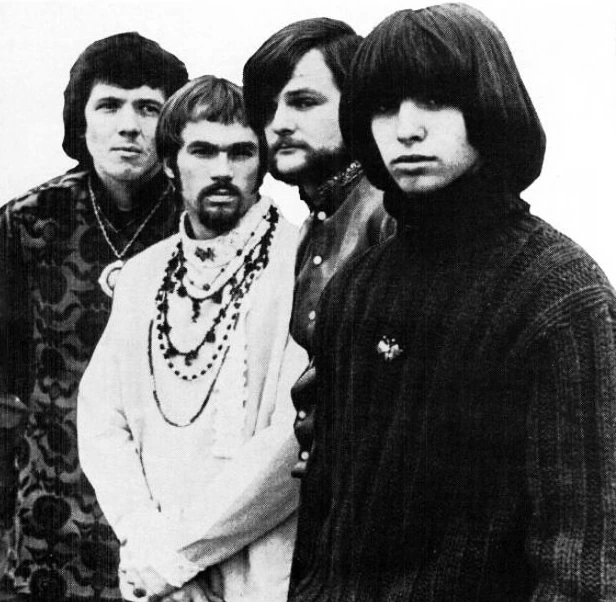
The dominant cultural referent for 'Iron Butterfly' is the blank" rel="noopener noreferrer">American rock band formed in 1966 in San Diego, California. That band released the iconic 1968 album 'In-A-Gadda-Da-Vida,' which remains one of the best-selling rock albums of all time, and it is the entity listed on the official domain ironbutterfly.com. When people search 'Iron Butterfly net worth,' they are almost certainly looking for information about this band and its financial legacy, not a clothing brand, a trademark registration, or any other business using a similar name.
Worth flagging: the name 'Iron Butterfly' does appear in other trademark contexts, including apparel and merchandise registrations with the USPTO (such as Serial 97086558). If you somehow landed on financial data tied to one of those other registrations, it would be completely unrelated to the rock band's wealth picture. Stick to the 1960s band as your frame of reference.
One more distinction: the band has operated under various lineups across decades. The current lineup listed on the official site includes Eric Barnett, Dave Meros, Bernie Pershey, and Martin Gerschwitz, none of whom are the founding members who drove the band's commercial peak. The 'Iron Butterfly net worth' question really covers two distinct things: the value of the brand and catalog, and the individual financial situations of former and current members. Those can be very different numbers.
What 'Net Worth' Actually Means for a Band Like This
Net worth for a music act is not the same as a single person's bank balance. For a band or music brand, it is better understood as the total estimated value of all assets associated with the act, minus any liabilities. Those assets include the music catalog, publishing rights, royalty income streams, merchandise, and the commercial value of the name itself as a licensing property. For Iron Butterfly specifically, the catalog, and particularly the rights to 'In-A-Gadda-Da-Vida', is the dominant asset. Revenue from streaming, sync placements in film and TV, and legacy licensing deals all flow from that catalog.
It is also worth understanding that band-level net worth estimates are almost always aggregated from public data, industry benchmarks, and reasonable inference. No private financial records are available, and no official valuation of the Iron Butterfly brand has ever been publicly disclosed. Any figure you see is an estimate with a real margin of error.
How Net Worth Estimates Get Built for a Music Act

When a reference site builds a net worth estimate for a band or music brand, they typically layer together several income and asset categories, then apply industry-standard valuation multiples where direct data is unavailable. Here is how that process generally works for a legacy rock act like Iron Butterfly:
- Catalog valuation: Music catalogs are typically valued at a multiple of annual royalty income. Industry norms in recent years have ranged from 15x to 25x annual earnings for established catalogs, though iconic songs can command higher multiples.
- Publishing and songwriting rights: The songwriter of record for 'In-A-Gadda-Da-Vida' is Doug Ingle. Whoever currently owns the publishing rights to that song collects a significant share of performance and mechanical royalties. Tracking down the current rights holder requires checking BMI or ASCAP databases and any known catalog sale history.
- Streaming royalties: Catalog tracks earn per-stream royalties on platforms like Spotify and Apple Music. 'In-A-Gadda-Da-Vida' continues to accumulate streams, especially given its placement in cultural references, film, and TV over the decades.
- Sync licensing: One-time fees for placing a song in film, TV, video games, or advertising. These can range from a few thousand dollars to six or seven figures for a major commercial or blockbuster film placement.
- Touring and live performance: Current touring revenue for the active band lineup contributes to the present-day income picture, but this is a much smaller driver than catalog income for a legacy act.
- Merchandise: T-shirts, vinyl reissues, and band-branded merchandise add incremental revenue, though rarely a dominant share for a band of this vintage.
- Historical album sales royalties: Physical and digital album sales from decades of releases, including reissues and compilations, contribute a baseline royalty stream.
The challenge is that most of these inputs are not publicly disclosed. Researchers piece together estimates using chart data, streaming figures from public dashboards, reported licensing deals, and known industry rate cards. The result is a reasonable approximation, not a precise accounting.
The Key Income Drivers for Iron Butterfly
The Catalog: 'In-A-Gadda-Da-Vida' Is the Engine

'In-A-Gadda-Da-Vida' is not just a hit song, the 17-minute album version became a cultural artifact that has generated royalties continuously since 1968. The album of the same name sold over 30 million copies over its commercial life, making it one of the best-selling rock albums ever released. That kind of sales history translates into decades of royalty income and a catalog with real, lasting value. Streaming has extended its commercial life significantly: the song appears on classic rock playlists and continues to be discovered by new listeners.
Sync Licensing and Pop Culture Placements
One of the most reliable income streams for legacy catalogs is sync licensing. 'In-A-Gadda-Da-Vida' has appeared in film, television, and advertising over the decades, each placement generates a synchronization fee paid to the rights holders. High-visibility placements in major productions can be worth significant sums, and the song's cultural recognizability makes it a recurring licensing candidate. This is an ongoing income source that benefits whoever holds the publishing rights today.
Touring Under the Iron Butterfly Name
The current active lineup continues to perform under the Iron Butterfly name. Touring revenue for a legacy act playing smaller venues and festival circuits is real but modest compared to catalog income. Live performance keeps the brand visible, which has indirect value for merchandise and licensing, but it is unlikely to represent the majority of the band's income picture at this stage.
Reissues, Compilations, and Streaming
Legacy rock catalogs benefit from periodic reissues, anniversary editions, and inclusion on compilation albums. These generate both upfront licensing fees and ongoing royalties. Streaming has particularly benefited catalog acts because their best-known songs accumulate streams passively without any promotional investment. For Iron Butterfly, this means 'In-A-Gadda-Da-Vida' continues to earn even without new releases.
What We Actually Know vs. What's Estimated
| Financial Data Point | Status | Notes |
|---|---|---|
| 'In-A-Gadda-Da-Vida' album sales history (~30M+ copies) | Historically documented | Widely reported in music industry records; supports catalog valuation |
| Current publishing rights ownership | Not publicly confirmed | Would require BMI/ASCAP or copyright office research to verify current holder |
| Annual streaming royalty income | Estimated from public streaming data | Spotify and Apple Music streams are publicly visible; exact royalty rates vary by contract |
| Sync licensing deals and fees | Largely private | Individual deal values are rarely disclosed; existence of placements can be verified |
| Current touring revenue | Unverified | No public financial filings; rough estimates possible from venue capacity and ticket pricing |
| Band/brand total net worth | Estimated only | No official valuation exists; figures across reference sites are research-based approximations |
| Individual member net worth (current lineup) | Estimated only | Separate from band-level estimate; members' personal finances are private |
| Founding member net worth (e.g., Doug Ingle) | Partially estimated | Some public information exists; royalty income from songwriting credit is the primary driver |
The honest summary is that the confirmed public data, album sales history, chart performance, known song placements, supports a meaningful catalog valuation. Everything beyond that is informed estimation. That clarification also helps when you are trying to interpret claims about Rain Phoenix net worth 'Iron Butterfly net worth'. No public financial statements, tax records, or verified disclosures exist for the Iron Butterfly brand or its associated entities.
Why Net Worth Numbers Vary So Much Across Sites
If you have already searched 'Iron Butterfly net worth' and seen different numbers on different sites, there are a few concrete reasons for the discrepancy. First, different sites use different valuation methodologies, some apply catalog multiples, others estimate based on reported income, and some simply copy or interpolate figures from other sources without updating them. Second, timing matters: a figure published in 2018 does not account for streaming growth, catalog sale trends, or changes in the rights ownership landscape since then. Third, some sites conflate band-level estimates with the personal net worth of the most prominent former members, producing numbers that mix apples and oranges.
There is also a structural problem specific to legacy rock acts: ownership of the catalog and publishing rights may have changed hands through label deals, bankruptcy proceedings, or private sales that are not publicly announced. If the rights to 'In-A-Gadda-Da-Vida' were sold or transferred, that changes the income picture for the band dramatically, but such transactions are often undisclosed or buried in licensing databases. Without access to the current rights holder, any catalog valuation is built on assumptions about who is actually collecting the income.
Band-Level vs. Member-Level Net Worth: They Are Not the Same

This is one of the most common sources of confusion in searches like this one. The 'Iron Butterfly net worth' question could reasonably mean any of the following: the estimated value of the band/brand as a whole, the personal net worth of founding members like Doug Ingle or Ron Bushy, or the financial situation of the current active lineup.
This same distinction also explains why “punk #6529 net worth” results can be misleading without confirming which band, artist, or rights holder the estimate is actually referring to Iron Butterfly net worth. These are genuinely different numbers and should not be conflated. A related search you may see is the rule breaker net worth, which raises similar issues about what data is verifiable versus estimated.
Doug Ingle, as the primary songwriter credited on 'In-A-Gadda-Da-Vida,' would historically have been the individual most directly benefiting from publishing royalties tied to that song, assuming he retained those rights over the decades. In standard discographic references, songwriting for “In-A-Gadda-Da-Vida” is attributed to Doug Ingle, part of why the 1960s band is the primary identity associated with the name credited on 'In-A-Gadda-Da-Vida'.
Ron Bushy, the longtime drummer who passed away in 2021, had his own financial history with the band and any royalties or assets would now be part of his estate. Current members of the lineup, Eric Barnett, Dave Meros, Bernie Pershey, and Martin Gerschwitz, are performing artists working under the band name, but they may not have the same stake in the original catalog that founding members held.
If you are researching the net worth of a specific former member, treat that as a separate search from the band-level estimate. Individual members have their own income histories, side projects, and asset situations. Comparing individual member wealth to other artists in the same era, or even to contemporary content creators and musicians tracked on sites like this one, requires keeping those categories clearly separated. If you are also curious about rajahwild net worth, treat it as a separate artist-level figure and verify the income categories behind any estimate.
How to Verify and Update the Net Worth Figure Today
If you want to do your own due diligence on the Iron Butterfly net worth question rather than accepting a single published figure, here is a practical checklist of steps you can take right now:
- Check BMI or ASCAP databases: Search for 'In-A-Gadda-Da-Vida' on bmi.com or ascap.com to identify the current registered publisher and songwriter of record. This tells you who is collecting performance royalties today.
- Search the U.S. Copyright Office records: Copyright.gov allows you to search registration and transfer records for works registered after 1978. This can reveal whether the song's copyright has been transferred or renewed.
- Look up Spotify and Apple Music stream counts: Both platforms show public play counts on artist and song pages. Use a rough royalty rate of $0.003 to $0.005 per stream as a ballpark to estimate annual streaming income.
- Search for known sync placements: A Google search for 'In-A-Gadda-Da-Vida film TV commercial' will surface documented placements. Each confirmed placement represents a sync fee that contributed to income at some point.
- Check recent catalog sale news: Music catalog acquisitions have been a major industry trend since 2020. Search 'Iron Butterfly catalog sale' or 'Iron Butterfly rights' in Google News to see if any transactions have been reported.
- Cross-reference multiple net worth sites and note their methodology: If a site explains how it calculated its estimate, weight that figure more heavily than one that simply states a number with no sourcing.
- Look for estate or probate records: For deceased founding members, estate filings in relevant jurisdictions can sometimes reveal asset values, though these are not always public.
- Check the official Iron Butterfly website for current activity: ironbutterfly.com lists current members, upcoming shows, and band history — useful for assessing the touring and merchandise income picture today.
No single source will give you a complete picture. The most reliable approach is to triangulate across the catalog valuation (based on streaming data and known royalty rates), documented sync and licensing history, and any confirmed rights transactions. That gives you a range rather than a single number, which is actually the more honest representation of where the band's financial value sits.
Putting It All Together: What the Evidence Suggests
Iron Butterfly's commercial story peaked in the late 1960s and early 1970s, but the catalog has generated income for decades since. The 'In-A-Gadda-Da-Vida' album's extraordinary sales history, combined with ongoing streaming, sync licensing, and legacy cultural presence, supports a band-and-catalog valuation in the low-to-mid millions of dollars under most reasonable estimation frameworks. That figure is sensitive to who currently holds the rights, what licensing deals are active, and how catalog multiples are applied.
The current active lineup continues to perform and maintain the brand, which adds incremental value but is not the financial engine here. The real money, historically and today, flows from a 17-minute album track recorded more than 55 years ago. That is both the band's greatest asset and the reason any net worth figure needs to be anchored in catalog research rather than speculation about touring or merchandise income.
If you are comparing Iron Butterfly's financial legacy to other music acts or entertainment figures from the same era, keep in mind that catalog ownership complexity, label deal history, and rights transfers make direct comparisons difficult. Renegade Piranha net worth is often estimated by looking at streaming performance, releases, and any verified business ventures. The same caveats apply to other legacy acts tracked across this site, whether you are looking at artists from rock, hip-hop, or any other genre, the gap between 'what the brand earns' and 'what any individual associated with it has in their pocket' is almost always larger than it looks. If you are also tracking other creators or performers online, similar net worth wording can hide big differences in sources, assets, and what is being estimated rogue apex net worth.
FAQ
How can I tell whether an “iron butterfly net worth” number is about the band or something else with the same name?
Check whether the estimate explicitly references the 1966 rock band and “In-A-Gadda-Da-Vida.” If it mentions apparel, a USPTO trademark entry, or merchandising businesses tied to a different entity, treat it as unrelated to the band’s catalog value.
Why do estimates for Iron Butterfly’s net worth vary so widely across sites?
Different sites use different valuation inputs (streaming assumptions, sync frequency, catalog multiples) and some may update their numbers rarely. Also, some results blur band-level brand value with personal wealth of prominent former members, which creates apples-to-oranges comparisons.
What portion of Iron Butterfly’s value is typically assumed to come from streaming versus sync licensing?
Most band-and-catalog models weight streaming as ongoing but usually less immediate than sync. Sync licensing can create larger one-time payouts when the song is placed in film, TV, or ads, but the exact split depends heavily on who currently controls the publishing rights.
If the band is still performing, why doesn’t touring dominate the net worth estimate?
For legacy acts playing smaller venues and festival circuits, ticket revenue and merch can be real, but catalog income tends to be the larger, longer-lived driver. Touring also does not guarantee royalties from the original recording and publishing rights, so it often gets a smaller valuation weight.
Does the net worth estimate change if the rights to “In-A-Gadda-Da-Vida” were sold or transferred?
Yes. A rights transfer can redirect royalty income away from the parties a model assumes. Because many rights transactions are private or buried in licensing databases, public estimates may lag behind the real current rights holder.
Is it better to search for the net worth of Doug Ingle or Ron Bushy instead of the band?
They are separate questions. Band or catalog net worth reflects the value of assets and rights, while an individual’s net worth depends on personal holdings, side projects, and estate outcomes. If you want personal figures, search specifically for the person and verify what income categories are being included.
Why do some “net worth” articles mention “current members” but still talk as if the founding catalog is the main asset?
Because the ongoing lineup mainly sustains visibility and performs under the name, but the original publishing and recording assets may belong to different rights holders. A correct model can include current performance value as incremental, without assuming it replaces catalog-driven income.
How accurate are band-level net worth estimates for older acts like Iron Butterfly?
They are typically not precise accounting. They are built from public proxies (sales history, chart performance, streaming dashboards, reported licensing signals) plus industry-style assumptions, so you should expect a margin of error and treat numbers as ranges.
What due diligence steps can I take to validate an “iron butterfly net worth” claim?
Triangulate the estimate against catalog fundamentals: sustained streaming relevance, evidence of sync/placement history, and any confirmed rights transactions. If the site cannot explain what assumptions it uses (and how it updates them), treat the number as speculative.
Can two numbers both be “correct” if one site reports band net worth and another reports a prominent member’s net worth?
Yes. One figure can represent the collective brand and rights value, while another represents an individual’s personal assets and liabilities. Even when they share the same keyword, they can be measuring fundamentally different balance sheets.
Next Article
Renegade Piranha Net Worth: Updated Estimate and How It’s Calculated
Renegade Piranha net worth estimate and step-by-step calculation, sources to verify identity, and key income drivers.